Categoría: Reseñas

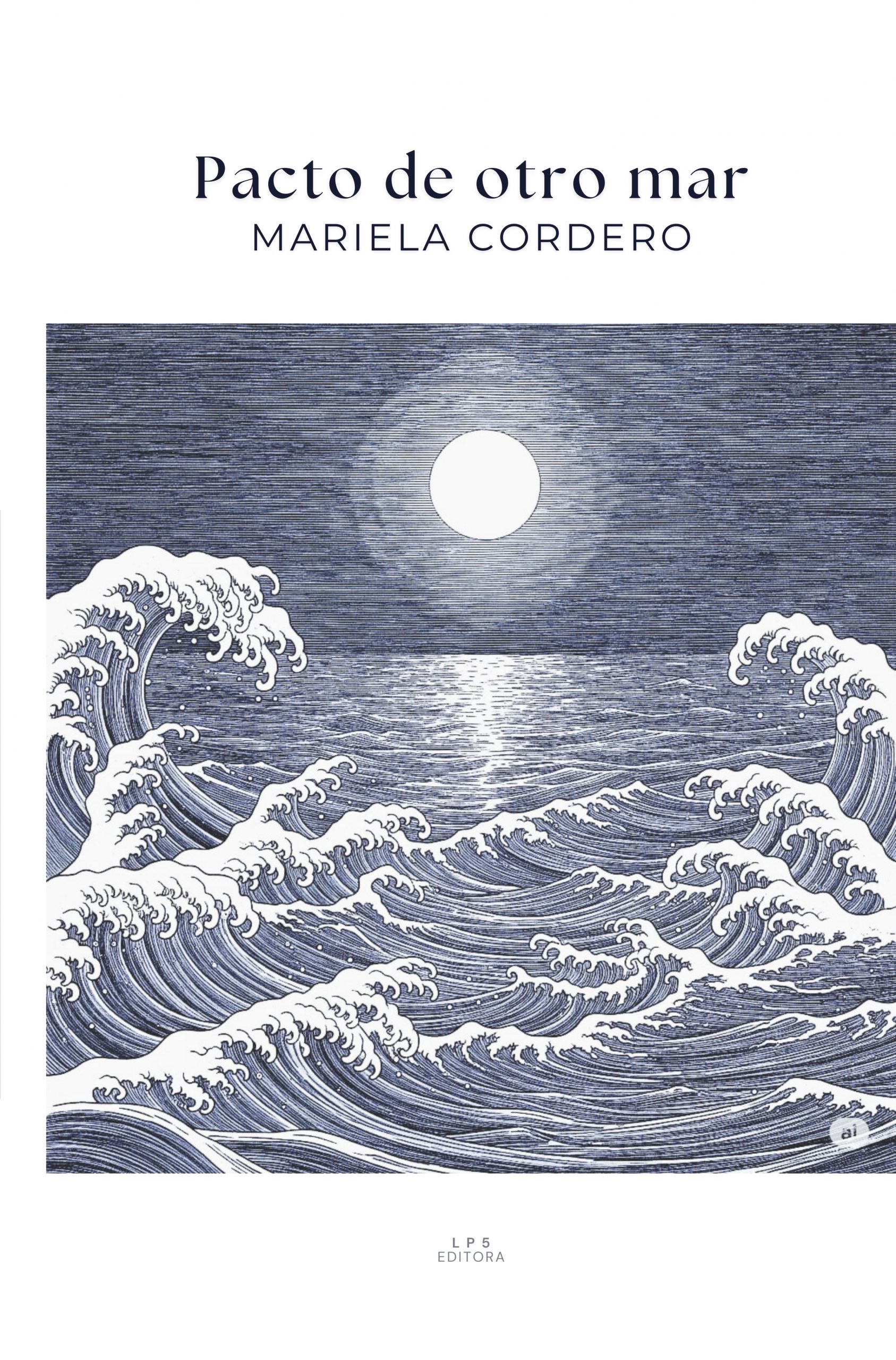
  • Pacto de otro mar, Mariela Cordero, (LP5 Editora, 2025)

    Pacto de otro mar, Mariela Cordero, (LP5 Editora, 2025)

    El maravilloso prólogo-reseña que escribe Gladys Mendía precede a un poemario escrito por Mariela Cordero: abogada, poeta, escritora, traductora y artista visual. Su poesía ha sido publicada en varias antologías internacionales. Ha recibido varias distinciones, entre ellas: Tercer Premio de Poesía Alejandra Pizarnik Argentina (2014); Primer Premio del II Concurso Iberoamericano de Poesía Euler Granda, Ecuador (2015); Segundo Premio de Poesía Concorso Letterario Internazionale Bilingüe Tracceperlameta Edizioni, Italia (2015); Premio Micropoemas en español del III concurso TRANSPalabr@RTE (2015); Primer Lugar en Concurso Internacional de Poesía #AniversarioPoetasHispanos mención calidad literaria, España (2016) y Premio Internacional Sahitto a la Excelencia Literaria (2023). Esta misma semana ha recibido el prestigioso VIII Premio Internacional de Traducción de Poesía «M’illumino d’immenso» (Italia).

    Ha publicado los poemarios:​​ El cuerpo de la duda​​ (2013);​​ Transfigurar es un país que amas​​ (2020) y​​ La larga noche de las jaurías​​ (2023). Actualmente, dirige las secciones #PoesíaVenezolana y #PoetasdelMundo en la​​ Revista de Poesía Poémame​​ (España). 

    El poemario que presentamos hoy, Pacto de otro mar, nos enfrenta, en una primera parte, al vértigo de lo frágiles que somos en la marea. Posteriormente, nos conduce, en la segunda parte, hacia la promesa de redención en la contemplación. Para disfrutarlo, hemos de dejarnos empapar por las palabras de la poeta, dejarnos arrastrar por las olas de sus versos, hasta no saber dónde termina la piel del mar y dónde empieza nuestra propia piel.

    Leer este poemario es dejarse arrastrar por un oleaje que no da tregua. Desde la primera página, el mar se convierte en territorio total. Es un viaje en el que el mar se convierte en metáfora absoluta: cuerpo, herida, memoria, deseo, violencia y redención. Cada poema es una ola distinta; un poemario-oleaje incesante con una voz poética que oscila entre lo íntimo y lo histórico: desde lo erótico y lo sagrado hasta la denuncia velada de la violencia colectiva y la memoria de la guerra (“La paz de los fusiles”, “Fértil”). 

    La escritura de Mariela Cordero despliega imágenes poderosas y sensoriales, donde el salitre, la espuma, el oleaje y la arena dialogan con la experiencia del cuerpo y del tiempo. Hay una constante tensión en sus páginas: el mar devora, pero también otorga; hiere, pero a la vez regenera nuevas pieles.

    La presencia del mar, como hilo temático, evita caer en la repetición vacía: cada poema amplía el horizonte simbólico y propone una variación distinta, desde el mito hasta lo contemplativo, desde la devastación hasta la ternura.

    En la segunda parte, el poemario se abre hacia lo espiritual y lo trascendente (“El patriarca Qinshui”, “Oración”, “Cordón rojo”), sin abandonar la carnalidad del deseo ni la memoria. Un cruce entre lo místico y lo erótico que hace de Pacto de otro mar un poemario imprescindible. 

    En conjunto, estamos ante un poemario en el que la cadencia de los versos, a menudo breves y entrecortados, reproduce el ritmo del oleaje: avance, ruptura, repliegue. Cada poema es una ola que se levanta con fuerza, estalla y se repliega, dejando tras de sí un sedimento de imágenes intensas, sensoriales, imposibles de olvidar. Así, Pacto de otro mar se erige como una metáfora total de la existencia humana. Pero lo más cautivador es cómo todo converge en un mismo ritmo: el pulso incesante del agua que arrastra y renueva. Con un lenguaje intenso y poético, Mariela Cordero nos abraza con sus versos en una marea hipnótica que, una vez acabada su lectura, nos cuestiona en lo más hondo: ¿qué somos cuando nada nos nombra?, ¿qué queda cuando el oleaje nos arranca la identidad?

    Aquí les dejamos una muestra:

    Sigues siendo mar

    En el sitio donde

    escondí la vergüenza

    en el lugar

    para contemplar la agonía

    ahí

    te quieren tierra

    pero sigues siendo

     ​​ ​​ ​​ ​​ ​​ ​​ ​​ ​​ ​​ ​​ ​​ ​​ ​​ ​​ ​​ ​​ ​​ ​​ ​​​​ mar.

  • VUITANTA-SIS contes i barbolles. Albert Planelles

    VUITANTA-SIS contes i barbolles. Albert Planelles

    Els microrelats presentats formen un conjunt de textos breus, però intensos, plens de metàfores i idees que conviden el lector/a a relectures. Barregen absurditat, humor, crítica social, introspecció i reflexions sobre art i literatura amb un llenguatge ric i precís. 

    1. Absurditat
    Hi trobem des de reflexions filosòfiques sobre l’obertura mental ¨Creure¨, fins a escenes grotesques ¨Sala d’espera¨, històries com “Judicis”, “Portes”, “Concurs” o les dues peces sobre l’“Àpali!” ens mostren com la lògica quotidiana es capgira i provoca perplexitat i somriure a parts iguals.

    La realitat es desfigura per donar lloc a escenes oníriques: arbres que es revolten ¨Revolta¨, criatures estranyes sorgint d’insults ¨Criatures¨, objectes que esdevenen protagonistes ¨Defectes¨. Relats com “Realisme Màgic” i “Somnis” evoquen Magritte i el surrealisme literari amb imatges impossibles.

    Aquesta dosi de fantasia manté viva la sorpresa del lector.

    2. Humor
    Molts dels relats juguen amb l’humor: un llibre que mata els lectors ¨Lectures¨, un assassí que se suïcida per evitar reincidir ¨Reincidència¨, un home que “es defensa” fins a provocar una mort accidental ¨Defensa¨. 

    “Caritat” converteix un gest compassiu en una escena sexual incòmoda i hilarant. “Crims” i “Assassins en sèrie” exploren la violència i la seva banalització, però amb finalitats iròniques. “Sopar caníbal” dona la volta al ritual caníbal.

    Aquest humor funciona com a mecanisme de crítica i desdramatització de temes tabú, aconseguint que alguns temes greus —violència, alienació, frustració— siguin més digeribles i alhora més punyents. 

    3. Potència visual i llenguatge ric
    L’Albert Planelles treballa amb un llenguatge amb moltes imatges i sensorial: paisatges industrials descrits com a muntanyes i semàfors ¨Paisatge¨, escenes de vent que acaben amb una tragèdia quotidiana ¨Vent¨, descripcions quasi pictòriques de personatges que semblen relíquies ¨Temps¨.

    L’Albert Planelles té una prosa molt expressiva, plena de metàfores i girs poètics amb un llenguatge molt precís, característica aquesta última de tota la seva escriptura.

    4. Crítica social
    Hi ha una mirada crítica envers les convencions socials, la política i la cultura. Es denuncia la hipocresia institucional ¨Acords¨, la buidor dels discursos ¨Alternatius¨, l’obsessió per la novetat i el consum ¨Cafè¨, o la dificultat de comunicar-se autènticament ¨Defensa¨. 

    Crítica la societat contemporània: ¨Prediccions¨, ¨Pèrdues¨. Textos com “Activitat política”, “Ministeris”, “Premi literari” o “Sanitat” són obertament satírics. 

    5. Introspecció
    Diversos microrelats exploren la condició humana: la impossibilitat d’abastar tot el coneixement ¨Llegir¨, la repetició obsessiva com a condemna ¨Dèria¨, el pas del temps i la memòria de la infància ¨Jugar¨. Alguns relats tenen un fons més trist o introspectiu: “Interrogatori” explora la mort com a metàfora de buidor vital. “Un pobre” reflecteix l’exclusió social i la mirada classista. “Lul·lianes” 1, 2 i 3 parlen de l’amor i la traïció en clau mística i filosòfica. “Desaparició” acaba sent una metàfora potent sobre la renúncia i el silenci.

    6. Reflexions sobre art i literatura

    Diversos relats es miren el fet artístic amb distància irònica: “Èxit” i “Plagi” parlen de la frustració creativa i el reconeixement social. “La pintura del silenci” i “Articulisme” reflexionen sobre el procés creatiu, el pes del buit i la necessitat d’expressar-se. “Llibreria” juga amb la confusió entre llibres i lectures, fent una crítica subtil al mercat editorial.

    Com a conclusió, podem dir que VUITANTA-SIS contes i barbolles, publicat per Tèmenos Edicions, és un recull de microrelats molt potent i variat. La brevetat dels seus textos obliga a la concentració d’idees i a l’eficàcia expressiva. En Planelles aconsegueix condensar pensaments complexos en escenes de gran força.

    És un conjunt de microrelats recomanable per lectors que gaudeixin d’una narrativa intel·ligent, amb un toc irònic i, de vegades, desconcertant. Són textos que conviden a la relectura, perquè cadascun amaga capes de significat que es descobreixen progressivament. En definitiva, VUITANTA-SIS contes i barbolles és un recull variat, ric i imprevisible on cada text és una petita peça autònoma que sacseja el lector/a amb imaginació, ironia o reflexió filosòfica. Un llibre perfecte per a lectors que gaudeixen de l’humor intel·ligent, el surrealisme i la crítica punyent de la realitat.

    Podeu conèixer més de l’autor a l’entrevista que li vam fer a la Revista.

    VUITANTA-SIS contes i barbolles.  Microrelats d’Albert Planelles 

    Tèmenos Edicions, Barcelona 2025

  • Entre dues fosques: La luz y el abismo en la poesía de Antoni Vidal Ferrando

    Entre dues fosques: La luz y el abismo en la poesía de Antoni Vidal Ferrando

    Entre dues fosques. Antoni Vidal Ferrando. Editorial Proa


    Entre dues fosques, la última obra de Antoni Vidal Ferrando, nos sumerge en un universo poético marcado por la profunda melancolía y la honesta reflexión. Este poemario, cuyo título evoca la idea de la existencia humana como un punto de luz entre dos infinitas oscuridades, se nutre del pensamiento de un poeta que se sabe en el final de su camino vital. A través de una cincuentena de poemas breves, Vidal Ferrando nos invita a un viaje por su memoria, sus preocupaciones y su amor incondicional por la literatura y la naturaleza, construyendo una obra que es, al mismo tiempo, un lamento y un canto de resistencia.

    Antoni Vidal Ferrando (Santanyí, 1945) es una de las voces más destacadas de la literatura catalana contemporánea, un poeta y narrador galardonado con prestigiosos premios como el Sant Joan de narrativa y el Carles Riba de poesía. Con el tiempo, ha logrado que su prosa, especialmente en sus últimas novelas, adquiera una fluidez poética que se centra en una visión vital, filosófica y política, teñida de la bondad que lo caracteriza. La voz del poeta, esa misma que late en el corazón de sus novelas, se hace aquí aún más palpable y nos recuerda que, más allá del verso, el autor es un hombre con una perspectiva única, forjada por la experiencia y el paso del tiempo.

    Ya en la primera página, Vidal Ferrando hace una declaración de principios con una cita de Vladimir Holan: «aquello que es solamente poético mata la poesía». Y es que su libro no busca la belleza vacía, sino que se enriquece con toques narrativos y una prosa que parece salida de un monólogo interior. El poemario se inicia con un sentimiento de nostalgia, un anhelo por lo perdido que se extiende a través de sus versos, evocando imágenes de un México rulfiano y la necesidad de cuidar la naturaleza.

    La voz del poeta se alza cargada de una tristeza que anida en su corazón, manifestada en la recurrente presencia de los cuervos. Sin embargo, en medio de esta oscuridad, late también la voluntad de recordar la belleza de la vida. Vidal Ferrando se siente abrumado por las grandes tragedias del mundo contemporáneo, ya sean los desastres climáticos o las guerras salvajes, y se pregunta si el único refugio posible es la gran literatura. Su poesía se nutre de referencias a autores como Rulfo, Faulkner, García Márquez, Swift, Lewis Carroll, Walt Whitman y Mercè Rodoreda, convirtiendo el poemario en una rica conversación con la tradición literaria.

    La melancolía del poeta es palpable en su percepción del final del camino, expresada en versos como «ni un sorbo de futuro» o en su lamento por la pérdida de las palabras: «Yo que siempre había amado las palabras, también las palabras que ahora busco, y las olas se llevan». Sin embargo, en su honestidad, también hay espacio para la memoria de aquellos que marcharon. A pesar de todo, Vidal Ferrando se rebela contra el desánimo. Su obra es un cruce entre un pasado edénico, un futuro que le preocupa y un presente que se presenta desesperanzador, especialmente ante la amenaza de opciones políticas extremas que «hacen llorar a los violines y matan las begonias». No obstante, su voz es la de un hombre que, a pesar de la desesperanza, manifiesta su optimismo con versos como «no me han de ver desfallecer, resistiré hasta que se acabe la tinta o hasta que no quede ninguna estrella».

    En Entre dues fosques, nos reencontramos con el Antoni Vidal Ferrando más grande, más poderoso y, a la vez, más triste y esperanzador. Es una obra donde la lengua brilla con una fuerza inusual, llena de adjetivos y sustantivos que se convierten en «purpurinas en la noche». Al final del libro, el poeta nos lega unas palabras de consuelo y un llamado a ser más atentos con el mundo. Entre dues fosques termina como empieza, como una luz en medio de la oscuridad. La obra de Antoni Vidal Ferrando es un faro que nos recuerda que, incluso cuando el futuro parece incierto, siempre nos quedarán las palabras, los recuerdos y la resistencia. Es una lección de humildad y una invitación a la reflexión que perdurará en la mente de los lectores mucho después de pasar la última página.

  • Silla amarilla, Olga González Latapi (Ed. Valparaíso, 2025)

    Silla amarilla, Olga González Latapi (Ed. Valparaíso, 2025)

    Trece instantes configuran este primer poemario de Olga González Latapi. Trece instantes en los que una se sienta en esa silla amarilla que espera, dentro de nosotras, a que nos atrevamos a iniciar ese volar hacia adentro que durará apenas unos instantes, hasta que volvamos a sentarnos.

    En esos instantes, abrimos los ojos por dentro y encontramos, en esta soledad, la más pura esencia de las distintas emociones que configuran este poemario. Escrito en verso libre, con una libre disposición de las palabras (el espacio también es parte del poema), estos poemas invitan a una reflexión sincera, sin distracciones. Una silla que abre lo que más adentro llevamos.

    En esos instantes, abrimos los ojos por dentro y encontramos, en esta soledad, la más pura esencia de las distintas emociones que configuran este poemario. Escrito en verso libre, con una libre disposición de las palabras (el espacio también es parte del poema), estos poemas invitan a una reflexión sincera, sin distracciones. Una silla que abre lo que más adentro llevamos.

    Creo que hay que ser valiente para enfrentarse a este poemario; ser valiente, como lo ha sido Olga a la hora de desnudar esas emociones tan intensas, esa soledad que le ha permitido bucear en sí misma y, por extensión, el lector se verá arrastrado a su propia soledad analizadora de su propia esencia.

    Creo que hay dos verbos que rigen el poemario de principio a fin: ser y estar. En el momento en que aceptas sentarte en esa silla, eres y estás contigo. Y ahí es cuando empezamos a descubrir algo que quizás ni imaginábamos. Nuevos caminos en nuestra memoria, nuevos caminos en nuestra piel, nuevos caminos en nuestros ojos que, quizás por primera vez, miran de verdad hacia adentro. Esa soledad que nos rodea, la masticamos despacio mientras nos vamos (re)descubriendo.

    todos los días escucho afuera de mi puerta

    voces de descanso

    una ciudad lejana

    residuos sobre mi ventana

    el constante de mi cerebro

    dentro de este espacio

    ahora escucho el día

    -Fragmento del poema Pasos fantasmas.

    La autora, con sólo trece poemas, hace una muestra de su dominio del lenguaje, de la capacidad de traspasar la piel del lector y hacerle dar la vuelta para verse desde dentro. Y sentir. Sobre todo sentir y palpar cada una de las emociones que se describen.

    Personalmente, este poemario me ha parecido una manera de bucear en una misma y hablar directamente con las propias emociones. Son poemas que necesitan ser leídos más de una vez, abandonándonos a la reflexión sin miedo, sin tapujos ni distracciones; con una desnudez emocional que debemos afrontar. Son poemas realmente profundos, que no me parecen de fácil lectura, pero el esfuerzo de adentrarnos en ellos tiene una grandísima recompensa: descubrir, conocer, aceptar. Y como no, darnos el gusto de conocer una voz poética diferente, directa, que ha sido capaz de remover, con trece poemas, lo más puro de nosotras mismas.

    Personalmente, este poemario me ha parecido una manera de bucear en una misma y hablar directamente con las propias emociones. Son poemas que necesitan ser leídos más de una vez, abandonándonos a la reflexión sin miedo, sin tapujos ni distracciones; con una desnudez emocional que debemos afrontar. Son poemas realmente profundos, que no me parecen de fácil lectura, pero el esfuerzo de adentrarnos en ellos tiene una grandísima recompensa: descubrir, conocer, aceptar. Y como no, darnos el gusto de conocer una voz poética diferente, directa, que ha sido capaz de remover, con trece poemas, lo más puro de nosotras mismas.

  • Reimagining the Self: Identity in the Shadow of Political Transformation

    Reimagining the Self: Identity in the Shadow of Political Transformation

    A number of books published in Ireland in the past few years relate to the centenaries of the First World War and the fight for Irish independence. Apart from being an opportunity to sell books, the conjuncture afforded readers an opportunity to reflect while delving into a receding page of history. Mary O’Donnell’s narrative collection Empire includes interlinked short stories dealing with the revolutionary period, along with a novella-length title piece. Notwithstanding its historical tie-in and informative potential, the true raison d´être of this book is the pleasure of reading.

    All of the stories are eminently readable, as we can clearly see in the title piece. During the First World War, the Wheelers, an Irish newlywed couple, travel to Burma, where the husband takes up an engineering job with a British company on a three-year contract. Separately, both of the protagonists become aware of their growing distaste for the prevailing colonialist attitude towards the local population, and both in the end are compelled to reflect on their own sense of identity, but in very different ways.

    The spare writing vibrates with unstated meaning as the narrator’s tone mirrors the characters’ circumspect manner of speech. We can almost hear their inner dialogue as they delicately choose what to communicate to each other and what to leave unsaid. Gaps left by unspoken thoughts cast shadows of social norms and propriety, highlighting the contrasting postures of men and women imposed by the social roles they feel obliged to embody. Whether the characters’ modulated diction is informed by historical research or by the author’s poetic sensitivity to language, the verisimilitude of the portrayal is palpable, and it is reinforced by a carefully created atmosphere. Craft is concealed by art, as when viewing a finely painted image whose effect we perceive immediately without discerning the brush strokes.

    The treatment of this story is novelistic, particularly in terms of character development, setting, atmosphere and storyline. Once comfortably engaged in the unfolding of the tale, some readers may wonder why this highly engaging story has not been written as a full-length novel. Only at the end will they find an answer to that question. Once she has returned to Dublin after her colonial adventure, Margaret Wheeler has clarified her thoughts about the currently acceptable roles for women and about her future plans: to her husband’s surprise and consternation, she has decided to take up studies at a university. The author has posed a conflict in such a way that a denouement of any sort might blur the clarity with which it has been set up, so it is fitting that this tale of the evolution of the main characters’ attitudes—and of their separate reflections on their own identities—should end in such a way, in media res.

    The book is more than just a collection of stories since they are interrelated through characters that link them, and this conjunction of fragmentary portrayals affords readers a clearer view of the confluence of historical and political currents and of how this conjuncture affected people’s lives in different ways.

    The Irish Uprising and the Civil War in its aftermath were fought again in 2016, this time with no real casualties. The centenary celebration of nationhood going on in Ireland at that time heightened people’s awareness that many national myths needed some polishing up, at the very least, before being held up to the eyes of a 21st century world, but it was impossible to get everyone singing from the same hymn sheet since some citizens wanted to remember and honour only republican supporters in the conflict while others had sympathy for all of the people who had suffered on account of being drawn into it. If dustups in side streets were just barely avoided, there was little restraint shown when it came to bullying by ideological hardliners. Among other nationalists, some followers of Sein Fein—a less user-friendly party nine years ago—did not want to remember those who were drawn, however unwittingly, into the role of fighting against republicans—or siding with their enemies—even when some of those unfortunate souls were barely conscious of the role they were playing in a larger political framework. In this scenario, Mary O’Donnell finds a useful role for literature: rather than waving placards, she sketches out a nuanced portrayal of the ways in which a complex historical situation diversely affected a number of people of different stations and social class. The author avoids polemic, aiming to shed light on past events that are laden with ambiguity.

    Through the lives and experiences portrayed in these stories, readers are able to view the events of the revolutionary period from several viewpoints, and this is a useful exercise in itself. Without needing to look further, we can appreciate the potential dangers that still loom as the force of demographics in Northern Ireland has led implacably towards a shifting majority and a new balance of power, a crystal-clear example of the importance in today’s world of being able to view political situations from multiple viewpoints.

    In a story entitled “Fortune on a Fair Day”, we meet a young man who falls in love, probably for the first time.  He decides to join the British army just after the execution of the leaders of the 1916 Easter Rising. His family and friends are divided over his decision, and some see it as folly or even treason. Folly it may be, but the young man’s decision aptly illustrates the sort of situations that occurred in the midst of the political currents of the time, and this lesson in history may be particularly of interest to readers who are less familiar with some of the nuances of the Irish political scene and the historical complexities of the revolutionary period.

    Empire, O’Donnell’s third short story collection, is an engaging and highly readable addition to a serious body of work that includes seven poetry volumes, four novels, and a corpus of critical writing and journalism. To readers interested in knowing more about O’Donnell’s writing, I recommend the references cited below.

    Empire by Mary O’Donnell, Arlen House 2018.

    Giving Shape to the Moment: The Art of Mary O’Donnell, Poet, Novelist and Short-Story Writer. Edited by María Elena Jaime de Pablos. Oxford: Peter Lang, 2018.

    Giving Shape to the Moment: The Art of Mary O’Donnell, Poet, Novelist and Short-Story Writer, review by Asier Altuna-García de Salazar of the University of Deusto (Bilbao), Spain, published in issue number 14 (17 March, 2019) of Estudios Irlandeses, open-access journal of the Spanish Association for Irish Studies (AEDEI).

    Note: A previous version of this review was published in the Irish-British journal The Blue Nib, in both the print and online editions of Issue number 39, but the digital version is no longer accessible on the web since that much loved journal has ended a good run lasting several years. Thus, we are now publishing this revised and updated version of my original review since the book it deals with, although prominently reviewed in The Irish Times at the time of its publication, deserves broader critical notice, and this situation highlights the dismal fact that just a very small handful of Irish writers, whose names are familiar to the worldwide reading public, get significant attention in the press and media.

  • With Proust Down Memory Lane

    With Proust Down Memory Lane

    Liner Notes, by Ciaran Berry, Gallery Press, 88 pp, €11.95, ISBN: 978-1911337478

    At first glance, the poems in this volume immediately appeal. It is something about the bright, attractive surface of the words and the light-hearted tone that seems to demand little of the reader – just the ticket when one is in the mood for a leisurely read. Such an impression might well be the first judgment of readers in the habit of leafing through an unfamiliar volume of poetry, looking for a flash of recognition, a point of entry that says we want to read this text.

    But the complex subtext emerges as references to iconic milestones draw readers down the pathways of memory. Since sensation and emotion are the glue that binds memory, the paths marked out through reference to landmarks of popular culture transport readers willy-nilly to the terrain of recollection and feeling – a roiling counterpoint to the tranquil surface, its bulk submerged like an iceberg.

    Although this volume has no formal textual divisions other than the individual poems, it is highly structured and articulated thematically through leitmotifs and major themes, and above all by means of an all-encompassing metaphorical device: the image of a record album – with all its appurtenances – that, through deliberate metaphor-mixing, sometimes becomes a compact disc or a mixtape. Sooner or later the perusing reader will be drawn towards a sequential reading of the book, embroiled in its running narrative that begins even before the first titled poem with the invocation that prefaces the volume:

    Once more, the sprockets turn, engage the spools –
    I’ve pressed record so that you can press play.

    In this jewel case, on this inlay card, for you:
    the song sequence of what I’ve tried to say.
    Once more, the sprockets turn, engage the spools –
    I’ve pressed record so that you can press play.

    The opening poem “Liner Notes” serves as both introduction and instruction manual:

    Because this song’s made of the airwaves
    a time machine you start to play the air
    guitar of memory, making a country
    so you can walk back into it, like a man
    on rewind in a silent film, his whiskey tumbler
    filling up as he rises from his stool
    and steps backwards towards the avenue
    where cars, cabs, trucks reverse away from him,
    and the lights, for once turn amber to green;
    where the two hands on his watch unravel time,
    like a maiden aunt unpicking a whole evening’s worth
    of knitting over the dropped stitch that means
    she must go back before she goes on.
    You raise the record from its sleeve again,
    hold it grail-like into the wayward light,
    to read the liner notes on a life you’ve lived
    all wrong.

    Readers accompanying the poet in this exercise in recall “make a country so [they] can go back into it”, a country made of memory, rich in custom and culture, in signs and symbols. Berry’s introduction resonates with Marcel Proust’s reminder that this country has a few interesting peculiarities that allow us to reconfigure the reality of which it is an unfaithful copy: “Memory, instead of being a duplicate, always present before one’s eyes, of the various events of one’s life, is rather a void from which at odd moments a chance resemblance enables one to resuscitate dead recollections.” In his novel In Search of Lost Time, he adds, “People claim that we recapture for a moment the self that we were long ago when we enter some house or garden in which we used to live in our youth. But … it is in ourselves that we should rather seek to find those fixed places, contemporaneous with different years.”

    In effect, like Arnold Swartznegger in Total Recall, we can go on vacation to a reality reconfigured to our own specifications – and Berry does precisely this. According to him, perhaps getting it right this time.

    In “Foley”, Berry invokes the work of Foley artists who add sound effects to films and other media in order to explore the links between sounds and memory:

    A horse was two cups tapped
    against a tabletop. ..
    Now the foley
    of the past’s awake again and hard
    at his mimetic work.
    … white-face mime plunging
    a hand into the lucky bag
    of time, he conjures, from a fistful
    of cellophane, a scrim of rain
    insect wings from a scrap
    of sticky tape, a pocket fan.

    Towards the end of this nine-stanza poem, Berry again takes up the theme of the weight and quality of the past in relation to our present lives:

                                               The past
    is bric-à-brac and hand-me-down,
    a thrift-store suit, a vagrant troupe
    of clowns, one on the tuba,
    one on the clarinet. The past
    is kitsch and stand-up, an irate duck
    railing against the mute maker
    who keeps setting him up. …

    Like a number of other writers of the Irish diaspora, Berry chooses to publish his verse in his native land. His publisher, Gallery Press, has made a home for writers abroad such as Eamon Grennan and Sara Berkeley, the sort of connection that helps a small island nation catching the winds of globalised trade – and often trading in words and ideas – to punch above its weight in the world of letters as well as in other fields.

    Berry’s poems reflect both his American experience and his Irish origins through references particular to one or the other. Perhaps the most ambitious poem in this volume is “Shopping in Whole Foods on a Snowy Evening”, a stylistic tour de force that refers to his family life in America and again and again to the American poet Robert Frost and his poem “Stopping by Woods on a Snowy Evening”.

    The opening lines are contrived to nonchalantly link the poem (by means of the word “too”) to the musical leitmotif running through this collection:

    If commerce, too, has its music, then it’s in kumquat, pine
    nut, Arctic char,
    it’s the squeaky front wheel of my little cart which
    seems to know the way
    between the dry goods and the winter greens …

    After some foreshadowing in both the title and the opening stanza, a snowy parking lot and the sound of a bell suddenly lead the poet to Frost’s poem and four of the best known quatrains in American poetry. Then succeeds a remarkable fugue as the mind of the poet careens from place to place and theme to theme, from shopping to depression, from Frost’s father to King Lear.

    Frost managed to be ambiguous and controversial throughout his career and even after his death. A few critics are still taking pot-shots at his reputation on various grounds, most recently finding in his well-known poem “Mending Wall” a rationale for the nativist populism and wall-building zeal of Donald Trump and Yitzhak Rabin. Berry’s poem demonstrates by example rather than through analysis and argumentation his understanding of and admiration for this figure of American poetry. If we undertook to parse all of the explicit and merely suggestive references to Frost’s life and poetry contained therein, we could be at it for a good while.

    But not all of Berry’s poems display this degree of complexity – that could be too much of a good thing. His more accessible poems afford sufficient relief and the collection provides ample context to allow readers an opportunity to become familiar with the poet’s style and acquire the motivation to undertake the quest of discovery that his most complex poems represent.

    One of the final poems in this volume is entitled “Glossolalia”. This delightful word is appropriately suggestive of one of the poet’s characteristic techniques, used in his more complex poems such as “Stopping by Whole Foods on a Snowy Night”, involving fugue-like writing strategies that rely on fleeting associations, deliberate metaphor mixing and the quixotic processes of the brain to evoke slurries of meaning in ways that rational discourse and orderly rhetoric could never approach – impressive displays of the power of poetry. His ability to move mercurially between simplicity and complexity, between a soufflé-light surface and deeper levels redolent of the rich complexity of a figgy pudding, makes his verse amenable as well as substantial.

  • “Entre cristales y sombras”, de Alda Pascuzzo-Lima

    “Entre cristales y sombras”, de Alda Pascuzzo-Lima

    *Reseña escrita por “Qué Leer”

    “Entre cristales y sombras” marca el debut literario de la poeta venezolana Alda Pascuzzo-Lima. Un poemario que revela una voz llena de sensibilidad, y también un dominio técnico digno de una autora experimentada donde se interna en las complejidades de la dualidad humana, explorando los contrastes que habitan nuestra existencia.

    Dicha y sufrimiento

    Vivo entre la dicha

    y el cruel sufrimiento,

    amarte es ventura

    amarte es tormento.

    Como una promesa

    que se lleva el viento

    vivo entre la dicha

    y el cruel sufrimiento.

    (pág. 30)

    Publicado en 2023 por Luis Felipe Capriles Editor, este libro es una obra rica y profunda que muestra a una autora con un manejo impecable de las formas poéticas clásicas, como el soneto, la glosa, la silva y el rondel, entre otras. 

    Su destreza técnica enriquece la lectura y resalta la atemporalidad de estas estructuras cuando se combinan con una voz poética fresca y auténtica.

    Sin ti

    (Trioleto)

    Vivir sin tu compañía

    acaba con mi esperanza

    es más duro cada día

    vivir sin tu compañía.

    Es una carga sombría

    de la tristeza, la danza,

    vivir sin tu compañía

    acaba con mi esperanza.

    (pág. 66)

    El hilo conductor de la obra es la dualidad: el contraste constante entre opuestos que, en su interacción, dan sentido a nuestra existencia. Desde el título hasta cada poema, la poeta nos sumerge en un diálogo entre luces y sombras, explorando la vida y la muerte, el amor y el desamor, la dicha y el sufrimiento. “Entre cristales y sombras” sugiere un juego constante de contrastes y reflexiones.

    ¿Quién dice?

    ¿Quién dice que la muerte es el final del camino?

    ¿Quién sabe si quizás sea sólo el gran destino?

    ¿Por qué tanto temor si es que a eso vamos todos?

    ¡Si, pase lo que pase, iremos de algún modo!

    (pág. 38)

    Pascuzzo-Lima logra, con cada composición, que el lector transite por un paisaje emocional cargado de imágenes vívidas y reflexiones profundas, donde lo universal se convierte en algo íntimo. La musicalidad de sus poemas y la riqueza de sus metáforas logran que cada composición sea una experiencia única, cargada de belleza y significado.

    Uno de los aspectos más destacados de este poemario es la capacidad de la autora para conectar los temas de su obra con la experiencia humana de manera honesta y conmovedora. En sus versos, el amor no es solo pasión, sino también melancolía; la muerte no solo representa el final, sino un nuevo inicio de cuestionamientos. Cada poema invita a una introspección que es tan necesaria como inevitable.

    ¿Acaso si te amara todavía?

    ¿Acaso si te amara todavía

    el dolor que me embarga inconsolable

    para explorar un camino insondable,

    dejar mi corazón por fin podría?

    (pág. 63)

    Este libro es una obra para quienes buscan redescubrir la belleza de las formas clásicas al servicio de una voz contemporánea. “Entre cristales y sombras” es una invitación a contemplar la vida desde múltiples perspectivas, a perdernos y encontrarnos entre luces y oscuridades.

    Una oportunidad imperdible de realizar este viaje poético que, como la vida misma, está lleno de contrastes. Alda Pascuzzo-Lima ha creado un poemario para quienes aman la poesía clásica y quienes buscan una conexión emocional y espiritual en cada verso. 

    Si buscas un libro que te invite a viajar entre claroscuros, a explorar la fragilidad y la fortaleza de la existencia, este poemario es para ti. Alda Pascuzzo-Lima ha llegado a la escena literaria con una voz que promete quedarse y resonar. No te pierdas la oportunidad de descubrirla.

    ¡Lee poesía clásica con una voz contemporánea a través de “Entre cristales y sombras”!

    • Reseña escrita por “Qué Leer”
  • Notas y relatos desde Candelaria, de José Luis Regojo (Ed. Fuerte Letra, 2025)

    Notas y relatos desde Candelaria, de José Luis Regojo (Ed. Fuerte Letra, 2025)

    José Luis Regojo (1958, Caracas, Venezuela), vive en Candelaria (Sta Cruz de Tenerife). Es catedrático de lengua inglesa y traductor de la obra del ecopoeta estadounidense beat Gary Snyder, al castellano y catalán. Autor de diversos libros de gestión de entidades sin ánimo de lucro y artículos periodísticos en Es Diari de Menorca. Ha publicado los álbumes ilustrados Max y su sombra (Ed. Proteus, 2012) y Cuento contigo, Nala (Ed. Escribe Conmigo, 2021). También es autor del poemario Fronteras (Autografía, 2018), de los libros de relatos Recetas y relatos de un año bisiesto (Autografía, 2019), Trece meses (Ed. Platero, 2021) y la novela-diario El pino (Ondina ed., 2023).

    Ha publicado poemas y relatos en antologías y distintas revistas digitales. Es director de la Revista Abierta de poesía, Poémame (http://152.228.140.20/ y Secretario de la Asociación Cultural Canaria de Escritores (Acte).

    Tal como nos avanza el autor en la cubierta del libro, ¨Notas y relatos desde Candelaria¨, publicado por la editorial Fuerte Letra, “se comenzó a escribir durante el otoño del año 2022 y finalizó el mes de diciembre de 2024. La semilla de algunos de los textos que van a leer a continuación, vieron la luz “digital” en revistas de literatura con sede en Candelaria, como las revistas de la Asociación Tamasma Cultural y de la Asociación Cultural Canaria de Escritores (Acte), así como en mi blog personal”.

    La lectura de este libro va a sugerir al lector un puñado nada desdeñable de emociones. Porque cualquier isleño con raíces candelarieras se dará por aludido en los relatos protagonizados por el océano. A nadie dejará indiferente la Casa Las Miquelas, centro alfarero fundamental para ayudar a mantener viva la tradición alfarera guanche en la villa mariana. De la misma manera, nos tocará el alma, ese mito extendido de nuestra amabilidad y mansedumbre que se pasea por todo el libro. Como canaria, me siento identificada con ese carácter tranquilo, que no es docilidad, no se confundan, sino amor a la placidez y la calma.

    Desde la playa de La Viuda a Igueste, pasando por Cuevecitas o Barranco Hondo, Caletillas, Malpaís, Araya o la propia Villa, el lector pasea por los espacios conocidos y por los paisajes humanos más emblemáticos y queridos de Candelaria. El catalán que vino a sentir canario ha firmado su testimonio literario de estos lares. Y lo ha firmado desde su balcón, como a él le gusta decir. Con su afabilidad innata y sus horizontes de para en par, José Luis no ha tenido problema alguno en sentirse canario. Ha abrazado sin pudor nuestro léxico y nuestros modismos hasta hacerlos suyos. Se ha acostumbrado (no sin cierto esfuerzo, eso sí) a nuestro elogio de la lentitud en el día a día. Y se ha dejado meter hasta el tuétano esa canariedad que solo el que ama esta tierra conoce de verdad.

    “El libro está compuesto de sensaciones, reflexiones, divertimentos, todos ellos surgidos mientras miraba el océano a nuestro alrededor, (desde su ventana, añado yo) y que tenemos por espejo desde la costa candelariera, sin olvidar, por supuesto, los susurros permanentes de los barrancos que nos abrazan. Nada ni nadie es real, todo es fruto de la ficción”.

    Pero entre ficciones y veras, asoman en la obra la mirada crítica de quien ve al océano escupir un pañuelo palestino, o el asombro casi pueril de quien se sorprende ante la inmensidad de una tierra volcánica de sequero que dificulta el caminar, la admiración ante las leyendas de Barranco Hondo o Malpaís o la actividad cultural permanente de la Villa. Todo le fascina. Todo lo sorprende. Esperamos que a ustedes también. Felicitamos al autor por este trabajo, que sin duda aporta unas pinceladas de  literatura inigualables al panorama cotidiano de Candelaria, al paisajístico, al histórico y al humano.

  • Caldron Bubble

    Caldron Bubble

    Brink, by Jo Burns, Turas Press, 64 pp, €12, ISBN 978-1913598242

    Double, double toil and trouble – William Shakespeare, Macbeth

    On January 6th 2021, the former US president and a band of followers staged what appeared to be a coup attempt in the nation’s capital city, featuring violence, a number of loyal state and local public servants, a larger group of armed thugs, and a big lie about a stolen election. Just twenty years after an attack on the nation’s military command centre, the same country saw an improbable attack on its Capitol building that had to be quashed by armed force.

    In Brink, Jo Burns sketches a world where the line that separates our lives from chaos appears to be alarmingly thin. The collection opens with the poem “The Time it Takes Revisited”, which reprises a similarly titled poem from her previous collection, White Horses, thus establishing the continuity of her new work. This new volume is more focused than the earlier work, which ranged broadly over the world, displaying the poet’s familiarity with languages and cultures in far-flung places as it surveyed the global wreckage of a post-colonial world. In her first collection, the tumultuous viewpoint from which her readers viewed the wreckage was often Northern Ireland of the 1990s, the home Burns had left in those chaotic years to eventually settle in Germany.

    This new volume begins with a series of poems that refer to present-day Germany, but also to the Weimar Republic during the rise of fascism. The themes introduced resonate with the title of the volume since they convey a sense of urgency. Once the topic of urgency has been expounded, Burns focuses on concerns that afford readers a broader perspective. The perfect storm of existential crises we face is certainly cause for alarm, but to believe ourselves uniquely afflicted by these crises would be to wilfully turn our backs on history since in some respects humans have never had it better. The doomsday feeling that undermines our psychic equilibrium is not unique to our generation. Early Christians – just to consider one example – lived out their lives in the conviction that the end was near.

    After ringing the alarm bell, Burns moves on to consider – even in these fretful times – some aspects of the fullness of life and the diversity of our world. She also refers to a handful of writers from Middle Europe and elsewhere whose unfamiliar names may send readers scurrying to Wikipedia. Their work mainly relates to the rise of fascism and the emotional and human fallout of World War II. These references lend gravitas to the collection and broaden readers’ perspective. The volume includes two accomplished translations by Burns of poems by the German poet Horst Lange. During the Nazi regime, Lange stayed to fight rather than flee and lived to tell the tale. Burns’s poem “German Autumn” is an impressionistic sketch of the bleak grimness of postwar Germany and bears the inscription “1946. After Stig Dagerman”. Dagerman was a Swedish writer and prominent anarcho-syndicalist sometimes compared stylistically with Franz Kafka. His writing reflected the sense of alienation that characterised the postwar period in much of Europe.

    In Brink, Burns offers a snapshot of our times that reveals changes in manners and habits which have occurred during the Covid crisis. The post-colonial wreckage she portrayed in her previous collection is still with us ‑ in fact the devastation has worsened in some respects ‑ while in Northern Ireland many are the citizens who still long for some sort of magical entente which would allow the population of that part of the island to move forward and unleash its potential. But today, wherever we happen to live, global concerns are right here on our own doorstep. The poet’s timely sketch of our brave new world builds on the writing style of her previous volume. She now delineates with new sharpness and clarity a description of our world from the point of view of a global citizen.

    In the poem “Imaginary Departure Lounges”, Burns reflects abstractly on the experience of life during the Covid crisis:

    After one year of lockdown, home-schooling
    and Zoom, you are dreaming of danger

    and flying to some imaginary lover
    of all lovers in Santiago, or San Francisco

    with a circle of friends (all artists).

    (…)

    In the liminal between insomnia and sleep,
    a volcano of volcanoes with the mother

    of all names has drawn vetoes to dream-affairs.

    Pipes have burst and your cellar is flooded.
    Duty is now pelting ash at your back,

    in pulsing morse code. It’s not over.
    Stay home. Stay home. Stay home.

    In “Cooking in the Anthropocene’’, Burns again reflects on the current moment, this time seen from an imagined future:

    Student of the next great epoch,
    reading this: imagine this poet of forty-four
    (at the time) on a Mac book (check
    capsules on Mars) thinking of how
    to charter years on the down

    When we reach the final stanzas of this poem, it becomes clear why the poet has chosen an imagined future as the viewpoint: she is considering how our actions might be judged by future generations.

    We preached on Facebook, over
    and over, about change, so we didn’t
    actually need to. And when a leader
    burnt all the facts, we smouldered
    as some posted Give him a chance.

    In the lines above, Burns highlights one of the important leitmotifs that runs throughout this volume: the theme of self-questioning. The poet asks herself again and again, having viewed signs of impending doom in populist mobilisations, in tendentious political discourse, and in an inadequate response to the climate crisis, did we do enough, did we respond with alacrity or did we merely continue to sleepwalk into a menacing future?

    Always in the background, overshadowing this discussion, looms the example of the Weimar Republic. Our current judgment is that those citizens didn’t do enough, in fact, did the opposite: as some of them became complicit in a nightmarish political turn that threatened the basis of our civilisation and led to abominations, as an even worse global catastrophe was narrowly averted, other citizens impotently fretted. If such a situation were to repeat itself, would we, armed with our knowledge of the past, act differently?

    The development of this theme can be seen in the poem “Freefall”, which begins as follows:

    Because of the sequential chain
    of things, I submerged, my evening
    Pinots un-syncopated by female gossip
    at the bar. Everything was horizontal
    and heavy, a stagnation of status quo.

    The poem begins at a leisurely pace, then suddenly takes a dramatic turn in the third stanza: “Then the attack on the synagogue / sent things fluid”. In the following stanza, the poet herself becomes the subject: “I can’t dam, // but I will damn these years, / where everything in me splayed / and straightened.”

    In the final stanza, the poem moves with a sense of inevitability towards its conclusion:

    The irony and unyielding motion
    of the flood that swept us all
    off tangent. Passive-Aggressive
    on the lip, I write it; brink,
    the tilt that we spectated.

    As Brink proceeds to its close, Burns reprises its main themes – personal responsibility, urgency, life going on, some of the good moments we still have. The final poem is a coda that restates these themes. Burns refers again to populism, the current miasma of unsubstantiated rumours and lies, the public response to crises, and to our own actions: how we respond to events that might shape our lives. Since this poem aptly sums up the thematic content of Brink, I will conclude on this note, quoting it in its entirety.

    March

    The populist’s open-mic is on
    and the crowd is waving Reichsbürger flags.
    Someone is harping on about vaccines,

    Gates, reptilian overlords,
    and of course 5G and Rothschild.
    I meet up for the first time

    with a friend, since the lockdown.
    We’ve the same intention, to spectate
    a farce, the one our kids are facing.

    But we’re happy, despite the distance,
    sitting together, in our mission.
    We pop too many corks and prost

    on the pier, above the rabbit hole,
    tipsy, dangling over murky water.
    Summer’s coming but we’re split,

    conspiracy or truth. And who’s to say
    which is which or even who is who?
    I’ve lived division in my youth.

    Now I face the moon expanding
    with a breath that’s not my own,
    in a land that’s not my home.

    We are witnesses. Whatever comes.

  • Haiku, Naming Things and the Poetics of Reason

    Haiku, Naming Things and the Poetics of Reason

    Irish poet Geraldine Mitchell begins her new collection as she means to go on, choosing as an epigraph an untitled, haiku-like poem in an exalted tone:

    Todas las entradas

    a blackbird knaps
    the flint of my heart,
    sparks fly

    Written in a non-classical style, the epigraph is a signpost indicating the celebratory mood prevailing in this collection, her fifth in 15 years. The mini-poem is the first of several graceful haiku-like forms sprinkled throughout the volume like pixie dust. Formally diverse, mostly without titles, standing alone on a page, they resemble marginalia. Like a Greek chorus, they make meta-commentaries on the text as well as statements and observations.

    seabirds
    face into the wind

    waves explode
    like outraged snow

    trees are open
    cages where birds
    in safety
    sing their limits

    Seeking new challenges, Mitchell experiments with form without becoming wedded to a formula, so each collection is a revelation. The haiku-like poem below has a title, a more formal syntax, and a discursive tone, and it manifests an element of surprise, giving readers a chance to consider how much the feeling of haiku is associated with a particular syllabic arrangement, as opposed to line breaks or thematic content.

    FOLLY

    I have fallen in love
    with a tree.
    At my age.
    Imagine.

    This collection is permeated by the notion of age, of longevity and mortality, something inquieting and hard to ignore. The first two poems assault the reader’s sensibility, and a Proustian motif emerges from the first: “the past is too much when the present is thinning and the future grows shorter by the day”. In the mid-section of this prose poem, Mitchell shares the following observation:

    Oh, the past is a sack
    stuffed with worn-out emotions that shouldn’t weigh
    anything, no more than a handful of feathers,
    comforting, soft, a pleasure to sift through, but you’re
    back on the ground with a jolt and your feet sink into
    the snow with the weight of the bag on your back
    and you look around for somewhere to dump it, but the
    scrapyards are closed for the season (…)

    It took me a good while to burrow into this volume, contemplating what I had experienced, sometimes feeling unready to move on after reading a particular poem, pausing to chew on each mouthful before biting off the next. Since many of the poems instil contemplation, to read them in a perfunctory way would be nonchalance or evasion.

    Mitchell constantly incorporates new formal variations that relate to the text as a whole, influencing how readers apprehend it; and these innovations invariably have their roots in her earlier writing. In this case, periods in the text have been omitted. Nothing is casual about Mitchell’s use of stylistic devices: the formal styling creates a specific effect, as in the sonnet-inspired poem “Need to Know”, whose playful formal scheme contrasts with an ominous content.

    where did you go in the night was it
    dark was it cold where you were out
    there on the sea in the night was there
    wind did it rain what did you see in
    the night on the sea in the rain did you
    meet your mother did you see yourself (…)

    The emotional tone of some of Mitchell’s recent verse tells readers that her involvement with events she observes is more than an aesthetic response: existential questions sometimes hang in the balance; echoes of experience can overflow like a river, as in the poem “In Spate”:

    This river will not see you light a candle on the bridge,
    the flowers you throw will waltz a moment, disappear.

    Rivers know no gods. Appease them now.

    “Home Movie”, the second poem in this volume, makes an impression with its plaintive, colloquial tone—beginning in mid-conversation—and with a breezy conversational style like a speaker talking to themself. The tone turns blithe as the monologue chirpily marches off in one direction while the subject matter shifts from colours and images to sadness, darkness, and death. In the following stanzas, the wind-battered ship of the narrative eventually rights itself to rest on an even keel. Whew! Disaster averted. Readers looking to just dip into a poem to be washed over by the language need to choose another; this poem gives no quarter:

    What I liked most were the colours
    of the film I played in my head
    that long year of sadness and darkness
    and death. (…)

    While the natural world supplies most of the objects of wonder that appear in this collection, the verse prompts us to contemplate existential situations since the discourse encompasses musings on our place in the world and misgivings about the current state, a convincing demonstration that the work of poets is not to entertain an audience until more important voices take the stage to explain how things really are; Mitchell’s verse manifests poetry as a form of discourse as valid as any, that can withstand examination as much as rants of politicians, analyses of self-defined experts or the logorrhoea of rappers.

    Even in a commercialized world, opportunities to have a genuine experience abound, usually hiding in plain sight. Mitchell and other Irish poets routinely perform in small venues, where it matters little whether the place is packed or half-full. By contrast, many people recently flew into Barcelona to hear Ricky Gervais—in person, not on the idiot box—explain to his enthusiastic fans why he believes that words can’t hurt people. Oscar Wilde’s observation about confusing the price of a thing with its value is not only still valid; it is an urgent warning addressed to the future.

    There is a lot of naming in this volume and much of it has to do with the natural world, but the act of putting names to things has further implications: thinking of Linnaeus, the action of naming is a first step in the accumulation of knowledge of the material world, and this notion resonates with much of Mitchell’s more recent verse.

    Before the web, poets transferred knowledge, using their mastery of words to disseminate experience in an amenable way. These days, you might spot Geraldine Mitchell and other County Mayo writers on a stealth visit to Dublin or Barcelona, but chances of hearing them read are much better in Castlebar, Louisburg or Strokestown, in remote parts of the West of Ireland. For the price of a pint, the audience at a poetry reading are not just entertained; they engage with others on topics of import to them, an activity permitted in some parts of our society, but in others, not so much. Community gatherings pre-date the internet, radio, the telegraph, and the printing press, so if poets have played key roles in social functioning and still do today, why do some people say they should get a real job?

    The American poet Gary Snyder dropped a trail of crumbs in 1974, when he published the poem “The real work” in Turtle Island, a Pulitzer Prize-winning collection of poetry and essays, obliquely suggesting that the “real work” of humanity is not furthering agendas promoted by corporate interests or any ruling elite; and for decades many readers have heeded his message.

    Mitchell’s published collections result partly from insights gleaned over a lifetime of covert observation and reflection. By her own admission, she spied on adults from an early age, covertly listening to their conversation with the ear of a radical sceptic, contrasting what she heard with her own experience in order to judge its truth value.

    Since the word truth covers a multitude of sins, I note in passing that the poet’s truth, more like a Swiss Army knife than a surgical instrument, is nonetheless a useful one. This truth is in our DNA, and we know it when we see it. Does someone hug you while trying to keep their body in the other side of the room? Does a politician’s face send a message that contradicts his or her discourse?

    Mitchell finds lessons for life in natural settings populated by trees, wildlife, the sea, and the moon; and while some people may consider this sort of thinking indulgent and specious, I give my enthusiastic assent to the notions about our place in the natural world expressed by Geraldine Mitchell, Gary Snyder, Wendell Berry, the young American poet Ricky Ray—and by other poets and writers.

    Geraldine Mitchell

    So many Irish poets—of long experience and relative beginners—are writing useful verse that it would be an injustice to single out just a few, and I believe that if there are any truths to be bagged—even partial or contingent ones—we are more likely to find them in the flutter of a leaf or the caw of a bird than in the farrago of entangled symbol systems that are modern language and thought. So, I admire the work—the real work—of these poets and writers who work to achieve clarity in language, even as chaos reigns, and, among them, Geraldine Mitchell, silent observer and radical sceptic.

    ***

    Naming Love by Geraldine Mitchell, 80pp, Arlen House, 2024, ISBN 978-1-85132-319-7. International distribution: Syracuse University Press.  Available through  blackwells.co.uk and kennys.ie.