Etiqueta: dick edelstein

  • Drawing Death’s Sting

    Drawing Death’s Sting

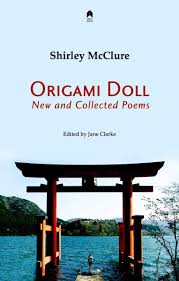
    Origami Doll: New and Collected Poems, by Shirley McClure, edited by Jane Clarke, Arlen House, 168 pp, €15, ISBN: 978-1851322107

    Poet Shirley McClure sadly died in September 2016 as a result of a return bout of cancer, the disease to which she had so artfully alluded in her poem “Mastectomy”, published nearly fifteen years ago. This recent edition of her collected poems should attract readers who know her reputation but may be unfamiliar with much of her poetry. For long-time followers, it offers an excellent chance to revisit nearly all her published work, today every bit as fresh and relevant as when it was first published, and to enjoy reading some thirty-one new and previously uncollected poems.

    McClure started writing poems at an early age and continued to do so occasionally until she began her serious, lifelong dedication to poetry at the age of forty. Interestingly, she attended Trinity College in the 1980s along with several women who were eventually to become known as writers. These included novelist Anne Enright and poet Jane Clarke, along with Eina McHugh, who surprised Irish readers with To Call Myself Beloved, a successful memoir dealing with the Troubles and a woman’s personal struggle to overcome its disastrous effects on her life.

    McClure’s first published collection was several years in the making, refined over and over. She submitted it three times in reworked versions for the highly prestigious Patrick Kavanagh Poetry Award for a best first collection, finally gaining second place in 2009. This persistence, combined with a dedication to perfection, became a hallmark of her career and inspired fellow writers.

    Once embarked on a serious quest, she set herself the goal of – insofar as such a thing might be possible – living her life as a working poet. The magnitude of such an undertaking is more than daunting and it would have been easy to call her objective an illusory one. But she managed in large part to achieve her aim by filling her life with workshops, community literary activities around Co Wicklow and, at times, a full schedule of readings throughout Ireland and abroad, another achievement that was a source of inspiration for writers.

    A deceptive and hard-won simplicity was always a major key to McClure’s distinctive writing style. As a result, it is notable that quite a few of her poems are highly memorable, harking back to times when a public appreciation of poetry was more general than today and perhaps poetry was relatively more about the reader. An important milestone in her career was travelling to the US to attend a workshop led by former poet laureate Billy Collins. More than an influence, Billy Collins’s acclaimed poetry and successful career represent above all a confirmation of the acceptability of the irreverent and light-hearted style that characterises much of Shirley McClure’s most memorable poetry even though, unlike Collins, she always wrote in several different registers.

    Uncommonly for a writer, McClure made contact on a personal level with many people as a result of her workshops and community activities. People she met were frequently surprised to encounter the characteristic reserve and shyness of a person whose poetry was typically described using adjectives such as bold, sexy and flirty. This apparent disjuncture illustrates the difference between the personality of a poet and the personae that can be displayed in writing. Poetry affords writers an outstanding possibility to unveil some of the less apparent facets of their personality and this aspect of writing was essential to the nature of Shirley McClure’s poetry.

    Who’s Counting?, her first published collection, included in its entirety in the present volume, reads very well today. Although her work clearly continued to evolve as her style became more refined, many of the poems included in this volume are able to stand with her best and deserve to be widely read and seriously contemplated today. Since the writer’s stature has grown along with a string of significant prizes, it is worthwhile now to revisit her earlier writing. Readers are bound to make new discoveries even among the poems that might have initially attracted less attention. Solid poems are able to withstand the test of time, and some of McClure’s reveal their multi-layered texture on rereading, being susceptible to new readings while revealing nuances of style and technique. On the other hand, even the simplest and most straightforward of her poems – perhaps especially these – hold their value precisely because of their directness and simplicity. The diverse themes explored in this first collection include, along with lighter topics, love relationships, the infirmity and loss of family members, and her experience with cancer. These divergent themes, treated in turn with a droll touch or with deep sincerity, are united in an affirmative philosophical approach to life most often expressed with a wry wit.

    A significant poem included in this collection is “Mastectomy”. McClure approached this delicate subject in a strikingly unusual and light-hearted manner, choosing to draw some of its sting by pretending to make light of the effects of a disease that strikes many women, often at an early age and without warning. The resulting poem probably provided an intended measure of solace to some of the women who had undergone this difficult experience by displaying the courage needed to share her own troubles and by putting misfortune in a more life-affirming, less devastating context. Her approach illustrates the subtlety that can be found in her earlier writing as she makes use of an extended metaphor in referring to a pair of china mugs: “You get given /certain things in twos- // love-birds, book-ends // matching china tea mugs ‑ ” Typically, the poem progresses implacably towards a strong conclusion: “there are still the days /when there is company for breakfast (…) it is good to know / that there are two // extra special, same but different / unchipped breakfast blue mugs // made to grace / your table.”

    From the beginning McClure’s poetry has been identified as being written from a clearly feminine point of view. In her first collection, this sensibility was manifest in her choice of subject matter, but it was her brash freedom of expression that demanded attention, the outspoken and teasing tone of her verse seeming to entail a subtextual message that a woman should be able to feel free to be, act and express herself any way she pleases. If such a notion may seem less novel today, it has not lost its force. In her later poetry, McClure began to include poems that refer to women in general, usually in an oblique way. Examples of these are the title poems of Origami Doll, the volume under discussion here, and of her second book, Stone Dress. Both of these poems have been widely published.

    Stone Dress, also included entirely in this volume, was published in 2015 by Arlen House. This collection reveals a consolidated style as the writer reprises some of the themes of her first collection and adds to these pillars a broad variety of whimsical reflections elaborated with cool confidence and unerring wit, and occasionally, by way of contrast, with delicate sincerity. Thematic divisions present in her first volume have been dropped since the various topics have now become more tightly bound together. Included are several poems reflecting on the experience of being a cancer patient. While not avoiding gruesome details and bizarre situations, the poet ably reduces their power to dismay by transforming them into occasions for humorous treatment.

    The thirty-one new poems included in Origami Doll are likely to appear quite familiar to followers of Shirley McClure’s poetry since several topics are revisited, along with a variety of new ones, while characteristic stylistic traits reappear, but with quite a few surprises. Despite the familiarity of style and content, the poems are fresh as well as substantial while reading them has the flavour of running into an old friend. Quite a few of these poems are retrospective, sometimes referring to events referenced in her previous collections. Opening this volume of collected works with the new poem “Sweet Apples” was an inspired editing choice since this poem manages to beautifully summarise in just a few lines the encouraging lessons that may be drawn from McClure’s remarkably congruent life and work. This is followed by the title poem, already well on its way to becoming an iconic example of the subtle traits found in Shirley McClure’s poetry pushed to their extreme as the writer first extends a metaphor, then stretches it to an enigmatic conclusion.

    In Origami Doll, the poems of a writer’s entire career whisper to each other as the newer ones shed light on the earlier ones and vice versa. The whole is a remarkably consistent body of work thanks in part to the careful original editing of the two previously published collections. Read all together, the poems take the form of a sort of ongoing conversation, underpinned by a stable philosophical view, often looping back to pick up on themes elaborated previously. This cohesion makes this volume of collected works by far the best way to read McClure’s poetry.

    The Shirley McClure Poetry Prize, awarded annually at the Los Gatos Irish Writers Festival, celebrated in Listowel’s sister town in California, ensures that the poet and her work will be remembered in Ireland and abroad. But since the typical shelf life of poetry volumes today is dishearteningly short, this publication of her collective work is significant. It also offers readers a convenient way to approach the whole body of McClure’s poetry. A lot of good reading will be found in its pages.


  • #PoémameVerano: Julio 2025

    #PoémameVerano: Julio 2025

    Hola,

    Llegó el verano y con él nuestro resumen anual de lo publicado desde el pasado mes de septiembre de 2024. Les incluimos una relación de los artículos de más interés que fueron publicados.

    El equipo fijo de la revista está compuesto por @osvid , @aldapascuzzo , @horten , @ze_pequenho , @marielacordero , @mariaprieto y @jlregojo . Esperamos que pasen un agradable verano y disfruten con la lectura de la buena poesía que les venimos ofreciendo desde septiembre de 2016.

    José Luis Regojo (jlregojo@gmail.com)

    Director Revista Poémame

    3 Poemas de Shivam Tomar, poeta indio

    With Proust Down Memory Lane

    3 Poemas de Madan Kashyap, poeta indio

    Reimagining the Self: Identity in the Shadow of Political Transformation

    3 Poemas inéditos de José Gabriel Cabrera Alva, poeta peruano

    Barcelona Poetry: Despertando a los Gigantes a través de la Poesía

  • #PoémameVerano: Mayo 2025

    #PoémameVerano: Mayo 2025

    Hola,

    Llegó el verano y con él nuestro resumen anual de lo publicado desde el pasado mes de septiembre de 2024. Les incluimos una relación de los artículos de más interés que fueron publicados.

    El equipo fijo de la revista está compuesto por @osvid , @aldapascuzzo , @horten , @ze_pequenho , @marielacordero , @mariaprieto y @jlregojo . Esperamos que pasen un agradable verano y disfruten con la lectura de la buena poesía que les venimos ofreciendo desde septiembre de 2016.

    José Luis Regojo (jlregojo@gmail.com)

    Director Revista Poémame

    3 Poemas de Germain Droogenbroodt, poeta belga

    Haiku, Naming Things and the Poetics of Reason

    3 Poemas de Liliana Quinto Laguna, poeta peruana

    13 preguntas y una poeta: Sol Mussons

    3 Poemas de Shoshana Vegh, poeta israelí

    13 preguntas y un poeta: Jorge León Gustà

    3 Poemas de Choo-In Kim김 추 인, poeta surcoreana

    Caldron Bubble

    3 Poemas de Hyang-Sook Sung성 향 숙, poeta surcoreana

  • Reimagining the Self: Identity in the Shadow of Political Transformation

    Reimagining the Self: Identity in the Shadow of Political Transformation

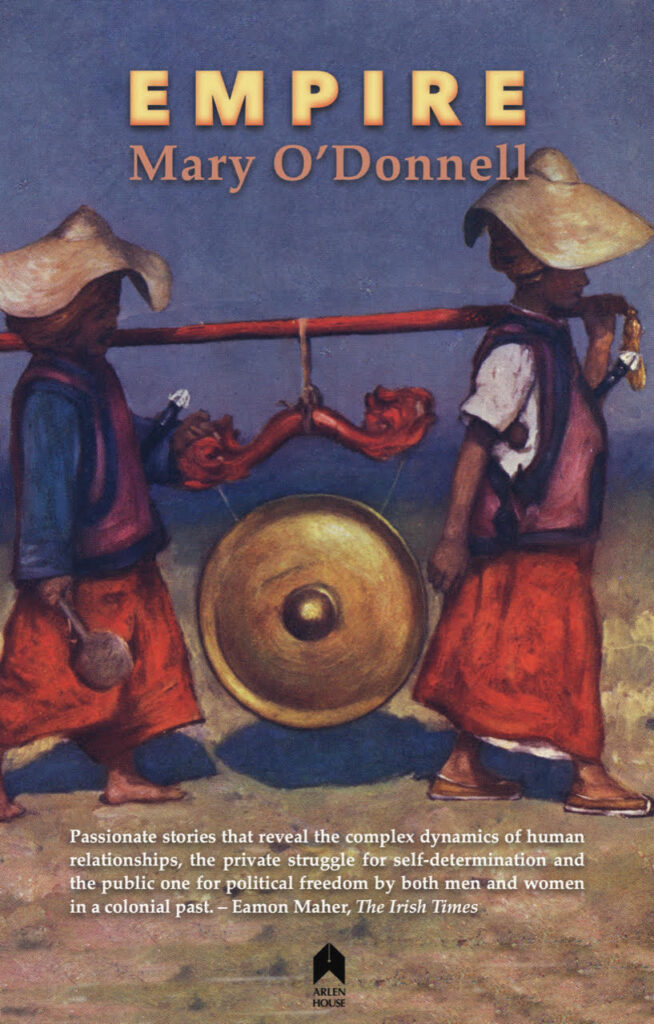
    A number of books published in Ireland in the past few years relate to the centenaries of the First World War and the fight for Irish independence. Apart from being an opportunity to sell books, the conjuncture afforded readers an opportunity to reflect while delving into a receding page of history. Mary O’Donnell’s narrative collection Empire includes interlinked short stories dealing with the revolutionary period, along with a novella-length title piece. Notwithstanding its historical tie-in and informative potential, the true raison d´être of this book is the pleasure of reading.

    All of the stories are eminently readable, as we can clearly see in the title piece. During the First World War, the Wheelers, an Irish newlywed couple, travel to Burma, where the husband takes up an engineering job with a British company on a three-year contract. Separately, both of the protagonists become aware of their growing distaste for the prevailing colonialist attitude towards the local population, and both in the end are compelled to reflect on their own sense of identity, but in very different ways.

    The spare writing vibrates with unstated meaning as the narrator’s tone mirrors the characters’ circumspect manner of speech. We can almost hear their inner dialogue as they delicately choose what to communicate to each other and what to leave unsaid. Gaps left by unspoken thoughts cast shadows of social norms and propriety, highlighting the contrasting postures of men and women imposed by the social roles they feel obliged to embody. Whether the characters’ modulated diction is informed by historical research or by the author’s poetic sensitivity to language, the verisimilitude of the portrayal is palpable, and it is reinforced by a carefully created atmosphere. Craft is concealed by art, as when viewing a finely painted image whose effect we perceive immediately without discerning the brush strokes.

    The treatment of this story is novelistic, particularly in terms of character development, setting, atmosphere and storyline. Once comfortably engaged in the unfolding of the tale, some readers may wonder why this highly engaging story has not been written as a full-length novel. Only at the end will they find an answer to that question. Once she has returned to Dublin after her colonial adventure, Margaret Wheeler has clarified her thoughts about the currently acceptable roles for women and about her future plans: to her husband’s surprise and consternation, she has decided to take up studies at a university. The author has posed a conflict in such a way that a denouement of any sort might blur the clarity with which it has been set up, so it is fitting that this tale of the evolution of the main characters’ attitudes—and of their separate reflections on their own identities—should end in such a way, in media res.

    The book is more than just a collection of stories since they are interrelated through characters that link them, and this conjunction of fragmentary portrayals affords readers a clearer view of the confluence of historical and political currents and of how this conjuncture affected people’s lives in different ways.

    The Irish Uprising and the Civil War in its aftermath were fought again in 2016, this time with no real casualties. The centenary celebration of nationhood going on in Ireland at that time heightened people’s awareness that many national myths needed some polishing up, at the very least, before being held up to the eyes of a 21st century world, but it was impossible to get everyone singing from the same hymn sheet since some citizens wanted to remember and honour only republican supporters in the conflict while others had sympathy for all of the people who had suffered on account of being drawn into it. If dustups in side streets were just barely avoided, there was little restraint shown when it came to bullying by ideological hardliners. Among other nationalists, some followers of Sein Fein—a less user-friendly party nine years ago—did not want to remember those who were drawn, however unwittingly, into the role of fighting against republicans—or siding with their enemies—even when some of those unfortunate souls were barely conscious of the role they were playing in a larger political framework. In this scenario, Mary O’Donnell finds a useful role for literature: rather than waving placards, she sketches out a nuanced portrayal of the ways in which a complex historical situation diversely affected a number of people of different stations and social class. The author avoids polemic, aiming to shed light on past events that are laden with ambiguity.

    Through the lives and experiences portrayed in these stories, readers are able to view the events of the revolutionary period from several viewpoints, and this is a useful exercise in itself. Without needing to look further, we can appreciate the potential dangers that still loom as the force of demographics in Northern Ireland has led implacably towards a shifting majority and a new balance of power, a crystal-clear example of the importance in today’s world of being able to view political situations from multiple viewpoints.

    In a story entitled “Fortune on a Fair Day”, we meet a young man who falls in love, probably for the first time.  He decides to join the British army just after the execution of the leaders of the 1916 Easter Rising. His family and friends are divided over his decision, and some see it as folly or even treason. Folly it may be, but the young man’s decision aptly illustrates the sort of situations that occurred in the midst of the political currents of the time, and this lesson in history may be particularly of interest to readers who are less familiar with some of the nuances of the Irish political scene and the historical complexities of the revolutionary period.

    Empire, O’Donnell’s third short story collection, is an engaging and highly readable addition to a serious body of work that includes seven poetry volumes, four novels, and a corpus of critical writing and journalism. To readers interested in knowing more about O’Donnell’s writing, I recommend the references cited below.

    Empire by Mary O’Donnell, Arlen House 2018.

    Giving Shape to the Moment: The Art of Mary O’Donnell, Poet, Novelist and Short-Story Writer. Edited by María Elena Jaime de Pablos. Oxford: Peter Lang, 2018.

    Giving Shape to the Moment: The Art of Mary O’Donnell, Poet, Novelist and Short-Story Writer, review by Asier Altuna-García de Salazar of the University of Deusto (Bilbao), Spain, published in issue number 14 (17 March, 2019) of Estudios Irlandeses, open-access journal of the Spanish Association for Irish Studies (AEDEI).

    Note: A previous version of this review was published in the Irish-British journal The Blue Nib, in both the print and online editions of Issue number 39, but the digital version is no longer accessible on the web since that much loved journal has ended a good run lasting several years. Thus, we are now publishing this revised and updated version of my original review since the book it deals with, although prominently reviewed in The Irish Times at the time of its publication, deserves broader critical notice, and this situation highlights the dismal fact that just a very small handful of Irish writers, whose names are familiar to the worldwide reading public, get significant attention in the press and media.

  • With Proust Down Memory Lane

    With Proust Down Memory Lane

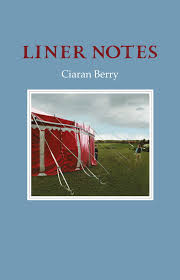
    Liner Notes, by Ciaran Berry, Gallery Press, 88 pp, €11.95, ISBN: 978-1911337478

    At first glance, the poems in this volume immediately appeal. It is something about the bright, attractive surface of the words and the light-hearted tone that seems to demand little of the reader – just the ticket when one is in the mood for a leisurely read. Such an impression might well be the first judgment of readers in the habit of leafing through an unfamiliar volume of poetry, looking for a flash of recognition, a point of entry that says we want to read this text.

    But the complex subtext emerges as references to iconic milestones draw readers down the pathways of memory. Since sensation and emotion are the glue that binds memory, the paths marked out through reference to landmarks of popular culture transport readers willy-nilly to the terrain of recollection and feeling – a roiling counterpoint to the tranquil surface, its bulk submerged like an iceberg.

    Although this volume has no formal textual divisions other than the individual poems, it is highly structured and articulated thematically through leitmotifs and major themes, and above all by means of an all-encompassing metaphorical device: the image of a record album – with all its appurtenances – that, through deliberate metaphor-mixing, sometimes becomes a compact disc or a mixtape. Sooner or later the perusing reader will be drawn towards a sequential reading of the book, embroiled in its running narrative that begins even before the first titled poem with the invocation that prefaces the volume:

    Once more, the sprockets turn, engage the spools –
    I’ve pressed record so that you can press play.

    In this jewel case, on this inlay card, for you:
    the song sequence of what I’ve tried to say.
    Once more, the sprockets turn, engage the spools –
    I’ve pressed record so that you can press play.

    The opening poem “Liner Notes” serves as both introduction and instruction manual:

    Because this song’s made of the airwaves
    a time machine you start to play the air
    guitar of memory, making a country
    so you can walk back into it, like a man
    on rewind in a silent film, his whiskey tumbler
    filling up as he rises from his stool
    and steps backwards towards the avenue
    where cars, cabs, trucks reverse away from him,
    and the lights, for once turn amber to green;
    where the two hands on his watch unravel time,
    like a maiden aunt unpicking a whole evening’s worth
    of knitting over the dropped stitch that means
    she must go back before she goes on.
    You raise the record from its sleeve again,
    hold it grail-like into the wayward light,
    to read the liner notes on a life you’ve lived
    all wrong.

    Readers accompanying the poet in this exercise in recall “make a country so [they] can go back into it”, a country made of memory, rich in custom and culture, in signs and symbols. Berry’s introduction resonates with Marcel Proust’s reminder that this country has a few interesting peculiarities that allow us to reconfigure the reality of which it is an unfaithful copy: “Memory, instead of being a duplicate, always present before one’s eyes, of the various events of one’s life, is rather a void from which at odd moments a chance resemblance enables one to resuscitate dead recollections.” In his novel In Search of Lost Time, he adds, “People claim that we recapture for a moment the self that we were long ago when we enter some house or garden in which we used to live in our youth. But … it is in ourselves that we should rather seek to find those fixed places, contemporaneous with different years.”

    In effect, like Arnold Swartznegger in Total Recall, we can go on vacation to a reality reconfigured to our own specifications – and Berry does precisely this. According to him, perhaps getting it right this time.

    In “Foley”, Berry invokes the work of Foley artists who add sound effects to films and other media in order to explore the links between sounds and memory:

    A horse was two cups tapped
    against a tabletop. ..
    Now the foley
    of the past’s awake again and hard
    at his mimetic work.
    … white-face mime plunging
    a hand into the lucky bag
    of time, he conjures, from a fistful
    of cellophane, a scrim of rain
    insect wings from a scrap
    of sticky tape, a pocket fan.

    Towards the end of this nine-stanza poem, Berry again takes up the theme of the weight and quality of the past in relation to our present lives:

                                               The past
    is bric-à-brac and hand-me-down,
    a thrift-store suit, a vagrant troupe
    of clowns, one on the tuba,
    one on the clarinet. The past
    is kitsch and stand-up, an irate duck
    railing against the mute maker
    who keeps setting him up. …

    Like a number of other writers of the Irish diaspora, Berry chooses to publish his verse in his native land. His publisher, Gallery Press, has made a home for writers abroad such as Eamon Grennan and Sara Berkeley, the sort of connection that helps a small island nation catching the winds of globalised trade – and often trading in words and ideas – to punch above its weight in the world of letters as well as in other fields.

    Berry’s poems reflect both his American experience and his Irish origins through references particular to one or the other. Perhaps the most ambitious poem in this volume is “Shopping in Whole Foods on a Snowy Evening”, a stylistic tour de force that refers to his family life in America and again and again to the American poet Robert Frost and his poem “Stopping by Woods on a Snowy Evening”.

    The opening lines are contrived to nonchalantly link the poem (by means of the word “too”) to the musical leitmotif running through this collection:

    If commerce, too, has its music, then it’s in kumquat, pine
    nut, Arctic char,
    it’s the squeaky front wheel of my little cart which
    seems to know the way
    between the dry goods and the winter greens …

    After some foreshadowing in both the title and the opening stanza, a snowy parking lot and the sound of a bell suddenly lead the poet to Frost’s poem and four of the best known quatrains in American poetry. Then succeeds a remarkable fugue as the mind of the poet careens from place to place and theme to theme, from shopping to depression, from Frost’s father to King Lear.

    Frost managed to be ambiguous and controversial throughout his career and even after his death. A few critics are still taking pot-shots at his reputation on various grounds, most recently finding in his well-known poem “Mending Wall” a rationale for the nativist populism and wall-building zeal of Donald Trump and Yitzhak Rabin. Berry’s poem demonstrates by example rather than through analysis and argumentation his understanding of and admiration for this figure of American poetry. If we undertook to parse all of the explicit and merely suggestive references to Frost’s life and poetry contained therein, we could be at it for a good while.

    But not all of Berry’s poems display this degree of complexity – that could be too much of a good thing. His more accessible poems afford sufficient relief and the collection provides ample context to allow readers an opportunity to become familiar with the poet’s style and acquire the motivation to undertake the quest of discovery that his most complex poems represent.

    One of the final poems in this volume is entitled “Glossolalia”. This delightful word is appropriately suggestive of one of the poet’s characteristic techniques, used in his more complex poems such as “Stopping by Whole Foods on a Snowy Night”, involving fugue-like writing strategies that rely on fleeting associations, deliberate metaphor mixing and the quixotic processes of the brain to evoke slurries of meaning in ways that rational discourse and orderly rhetoric could never approach – impressive displays of the power of poetry. His ability to move mercurially between simplicity and complexity, between a soufflé-light surface and deeper levels redolent of the rich complexity of a figgy pudding, makes his verse amenable as well as substantial.

  • Caldron Bubble

    Caldron Bubble

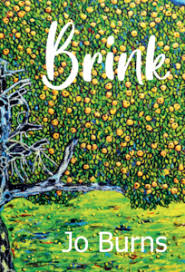
    Brink, by Jo Burns, Turas Press, 64 pp, €12, ISBN 978-1913598242

    Double, double toil and trouble – William Shakespeare, Macbeth

    On January 6th 2021, the former US president and a band of followers staged what appeared to be a coup attempt in the nation’s capital city, featuring violence, a number of loyal state and local public servants, a larger group of armed thugs, and a big lie about a stolen election. Just twenty years after an attack on the nation’s military command centre, the same country saw an improbable attack on its Capitol building that had to be quashed by armed force.

    In Brink, Jo Burns sketches a world where the line that separates our lives from chaos appears to be alarmingly thin. The collection opens with the poem “The Time it Takes Revisited”, which reprises a similarly titled poem from her previous collection, White Horses, thus establishing the continuity of her new work. This new volume is more focused than the earlier work, which ranged broadly over the world, displaying the poet’s familiarity with languages and cultures in far-flung places as it surveyed the global wreckage of a post-colonial world. In her first collection, the tumultuous viewpoint from which her readers viewed the wreckage was often Northern Ireland of the 1990s, the home Burns had left in those chaotic years to eventually settle in Germany.

    This new volume begins with a series of poems that refer to present-day Germany, but also to the Weimar Republic during the rise of fascism. The themes introduced resonate with the title of the volume since they convey a sense of urgency. Once the topic of urgency has been expounded, Burns focuses on concerns that afford readers a broader perspective. The perfect storm of existential crises we face is certainly cause for alarm, but to believe ourselves uniquely afflicted by these crises would be to wilfully turn our backs on history since in some respects humans have never had it better. The doomsday feeling that undermines our psychic equilibrium is not unique to our generation. Early Christians – just to consider one example – lived out their lives in the conviction that the end was near.

    After ringing the alarm bell, Burns moves on to consider – even in these fretful times – some aspects of the fullness of life and the diversity of our world. She also refers to a handful of writers from Middle Europe and elsewhere whose unfamiliar names may send readers scurrying to Wikipedia. Their work mainly relates to the rise of fascism and the emotional and human fallout of World War II. These references lend gravitas to the collection and broaden readers’ perspective. The volume includes two accomplished translations by Burns of poems by the German poet Horst Lange. During the Nazi regime, Lange stayed to fight rather than flee and lived to tell the tale. Burns’s poem “German Autumn” is an impressionistic sketch of the bleak grimness of postwar Germany and bears the inscription “1946. After Stig Dagerman”. Dagerman was a Swedish writer and prominent anarcho-syndicalist sometimes compared stylistically with Franz Kafka. His writing reflected the sense of alienation that characterised the postwar period in much of Europe.

    In Brink, Burns offers a snapshot of our times that reveals changes in manners and habits which have occurred during the Covid crisis. The post-colonial wreckage she portrayed in her previous collection is still with us ‑ in fact the devastation has worsened in some respects ‑ while in Northern Ireland many are the citizens who still long for some sort of magical entente which would allow the population of that part of the island to move forward and unleash its potential. But today, wherever we happen to live, global concerns are right here on our own doorstep. The poet’s timely sketch of our brave new world builds on the writing style of her previous volume. She now delineates with new sharpness and clarity a description of our world from the point of view of a global citizen.

    In the poem “Imaginary Departure Lounges”, Burns reflects abstractly on the experience of life during the Covid crisis:

    After one year of lockdown, home-schooling
    and Zoom, you are dreaming of danger

    and flying to some imaginary lover
    of all lovers in Santiago, or San Francisco

    with a circle of friends (all artists).

    (…)

    In the liminal between insomnia and sleep,
    a volcano of volcanoes with the mother

    of all names has drawn vetoes to dream-affairs.

    Pipes have burst and your cellar is flooded.
    Duty is now pelting ash at your back,

    in pulsing morse code. It’s not over.
    Stay home. Stay home. Stay home.

    In “Cooking in the Anthropocene’’, Burns again reflects on the current moment, this time seen from an imagined future:

    Student of the next great epoch,
    reading this: imagine this poet of forty-four
    (at the time) on a Mac book (check
    capsules on Mars) thinking of how
    to charter years on the down

    When we reach the final stanzas of this poem, it becomes clear why the poet has chosen an imagined future as the viewpoint: she is considering how our actions might be judged by future generations.

    We preached on Facebook, over
    and over, about change, so we didn’t
    actually need to. And when a leader
    burnt all the facts, we smouldered
    as some posted Give him a chance.

    In the lines above, Burns highlights one of the important leitmotifs that runs throughout this volume: the theme of self-questioning. The poet asks herself again and again, having viewed signs of impending doom in populist mobilisations, in tendentious political discourse, and in an inadequate response to the climate crisis, did we do enough, did we respond with alacrity or did we merely continue to sleepwalk into a menacing future?

    Always in the background, overshadowing this discussion, looms the example of the Weimar Republic. Our current judgment is that those citizens didn’t do enough, in fact, did the opposite: as some of them became complicit in a nightmarish political turn that threatened the basis of our civilisation and led to abominations, as an even worse global catastrophe was narrowly averted, other citizens impotently fretted. If such a situation were to repeat itself, would we, armed with our knowledge of the past, act differently?

    The development of this theme can be seen in the poem “Freefall”, which begins as follows:

    Because of the sequential chain
    of things, I submerged, my evening
    Pinots un-syncopated by female gossip
    at the bar. Everything was horizontal
    and heavy, a stagnation of status quo.

    The poem begins at a leisurely pace, then suddenly takes a dramatic turn in the third stanza: “Then the attack on the synagogue / sent things fluid”. In the following stanza, the poet herself becomes the subject: “I can’t dam, // but I will damn these years, / where everything in me splayed / and straightened.”

    In the final stanza, the poem moves with a sense of inevitability towards its conclusion:

    The irony and unyielding motion
    of the flood that swept us all
    off tangent. Passive-Aggressive
    on the lip, I write it; brink,
    the tilt that we spectated.

    As Brink proceeds to its close, Burns reprises its main themes – personal responsibility, urgency, life going on, some of the good moments we still have. The final poem is a coda that restates these themes. Burns refers again to populism, the current miasma of unsubstantiated rumours and lies, the public response to crises, and to our own actions: how we respond to events that might shape our lives. Since this poem aptly sums up the thematic content of Brink, I will conclude on this note, quoting it in its entirety.

    March

    The populist’s open-mic is on
    and the crowd is waving Reichsbürger flags.
    Someone is harping on about vaccines,

    Gates, reptilian overlords,
    and of course 5G and Rothschild.
    I meet up for the first time

    with a friend, since the lockdown.
    We’ve the same intention, to spectate
    a farce, the one our kids are facing.

    But we’re happy, despite the distance,
    sitting together, in our mission.
    We pop too many corks and prost

    on the pier, above the rabbit hole,
    tipsy, dangling over murky water.
    Summer’s coming but we’re split,

    conspiracy or truth. And who’s to say
    which is which or even who is who?
    I’ve lived division in my youth.

    Now I face the moon expanding
    with a breath that’s not my own,
    in a land that’s not my home.

    We are witnesses. Whatever comes.

  • Haiku, Naming Things and the Poetics of Reason

    Haiku, Naming Things and the Poetics of Reason

    Irish poet Geraldine Mitchell begins her new collection as she means to go on, choosing as an epigraph an untitled, haiku-like poem in an exalted tone:

    Todas las entradas

    a blackbird knaps
    the flint of my heart,
    sparks fly

    Written in a non-classical style, the epigraph is a signpost indicating the celebratory mood prevailing in this collection, her fifth in 15 years. The mini-poem is the first of several graceful haiku-like forms sprinkled throughout the volume like pixie dust. Formally diverse, mostly without titles, standing alone on a page, they resemble marginalia. Like a Greek chorus, they make meta-commentaries on the text as well as statements and observations.

    seabirds
    face into the wind

    waves explode
    like outraged snow

    trees are open
    cages where birds
    in safety
    sing their limits

    Seeking new challenges, Mitchell experiments with form without becoming wedded to a formula, so each collection is a revelation. The haiku-like poem below has a title, a more formal syntax, and a discursive tone, and it manifests an element of surprise, giving readers a chance to consider how much the feeling of haiku is associated with a particular syllabic arrangement, as opposed to line breaks or thematic content.

    FOLLY

    I have fallen in love
    with a tree.
    At my age.
    Imagine.

    This collection is permeated by the notion of age, of longevity and mortality, something inquieting and hard to ignore. The first two poems assault the reader’s sensibility, and a Proustian motif emerges from the first: “the past is too much when the present is thinning and the future grows shorter by the day”. In the mid-section of this prose poem, Mitchell shares the following observation:

    Oh, the past is a sack
    stuffed with worn-out emotions that shouldn’t weigh
    anything, no more than a handful of feathers,
    comforting, soft, a pleasure to sift through, but you’re
    back on the ground with a jolt and your feet sink into
    the snow with the weight of the bag on your back
    and you look around for somewhere to dump it, but the
    scrapyards are closed for the season (…)

    It took me a good while to burrow into this volume, contemplating what I had experienced, sometimes feeling unready to move on after reading a particular poem, pausing to chew on each mouthful before biting off the next. Since many of the poems instil contemplation, to read them in a perfunctory way would be nonchalance or evasion.

    Mitchell constantly incorporates new formal variations that relate to the text as a whole, influencing how readers apprehend it; and these innovations invariably have their roots in her earlier writing. In this case, periods in the text have been omitted. Nothing is casual about Mitchell’s use of stylistic devices: the formal styling creates a specific effect, as in the sonnet-inspired poem “Need to Know”, whose playful formal scheme contrasts with an ominous content.

    where did you go in the night was it
    dark was it cold where you were out
    there on the sea in the night was there
    wind did it rain what did you see in
    the night on the sea in the rain did you
    meet your mother did you see yourself (…)

    The emotional tone of some of Mitchell’s recent verse tells readers that her involvement with events she observes is more than an aesthetic response: existential questions sometimes hang in the balance; echoes of experience can overflow like a river, as in the poem “In Spate”:

    This river will not see you light a candle on the bridge,
    the flowers you throw will waltz a moment, disappear.

    Rivers know no gods. Appease them now.

    “Home Movie”, the second poem in this volume, makes an impression with its plaintive, colloquial tone—beginning in mid-conversation—and with a breezy conversational style like a speaker talking to themself. The tone turns blithe as the monologue chirpily marches off in one direction while the subject matter shifts from colours and images to sadness, darkness, and death. In the following stanzas, the wind-battered ship of the narrative eventually rights itself to rest on an even keel. Whew! Disaster averted. Readers looking to just dip into a poem to be washed over by the language need to choose another; this poem gives no quarter:

    What I liked most were the colours
    of the film I played in my head
    that long year of sadness and darkness
    and death. (…)

    While the natural world supplies most of the objects of wonder that appear in this collection, the verse prompts us to contemplate existential situations since the discourse encompasses musings on our place in the world and misgivings about the current state, a convincing demonstration that the work of poets is not to entertain an audience until more important voices take the stage to explain how things really are; Mitchell’s verse manifests poetry as a form of discourse as valid as any, that can withstand examination as much as rants of politicians, analyses of self-defined experts or the logorrhoea of rappers.

    Even in a commercialized world, opportunities to have a genuine experience abound, usually hiding in plain sight. Mitchell and other Irish poets routinely perform in small venues, where it matters little whether the place is packed or half-full. By contrast, many people recently flew into Barcelona to hear Ricky Gervais—in person, not on the idiot box—explain to his enthusiastic fans why he believes that words can’t hurt people. Oscar Wilde’s observation about confusing the price of a thing with its value is not only still valid; it is an urgent warning addressed to the future.

    There is a lot of naming in this volume and much of it has to do with the natural world, but the act of putting names to things has further implications: thinking of Linnaeus, the action of naming is a first step in the accumulation of knowledge of the material world, and this notion resonates with much of Mitchell’s more recent verse.

    Before the web, poets transferred knowledge, using their mastery of words to disseminate experience in an amenable way. These days, you might spot Geraldine Mitchell and other County Mayo writers on a stealth visit to Dublin or Barcelona, but chances of hearing them read are much better in Castlebar, Louisburg or Strokestown, in remote parts of the West of Ireland. For the price of a pint, the audience at a poetry reading are not just entertained; they engage with others on topics of import to them, an activity permitted in some parts of our society, but in others, not so much. Community gatherings pre-date the internet, radio, the telegraph, and the printing press, so if poets have played key roles in social functioning and still do today, why do some people say they should get a real job?

    The American poet Gary Snyder dropped a trail of crumbs in 1974, when he published the poem “The real work” in Turtle Island, a Pulitzer Prize-winning collection of poetry and essays, obliquely suggesting that the “real work” of humanity is not furthering agendas promoted by corporate interests or any ruling elite; and for decades many readers have heeded his message.

    Mitchell’s published collections result partly from insights gleaned over a lifetime of covert observation and reflection. By her own admission, she spied on adults from an early age, covertly listening to their conversation with the ear of a radical sceptic, contrasting what she heard with her own experience in order to judge its truth value.

    Since the word truth covers a multitude of sins, I note in passing that the poet’s truth, more like a Swiss Army knife than a surgical instrument, is nonetheless a useful one. This truth is in our DNA, and we know it when we see it. Does someone hug you while trying to keep their body in the other side of the room? Does a politician’s face send a message that contradicts his or her discourse?

    Mitchell finds lessons for life in natural settings populated by trees, wildlife, the sea, and the moon; and while some people may consider this sort of thinking indulgent and specious, I give my enthusiastic assent to the notions about our place in the natural world expressed by Geraldine Mitchell, Gary Snyder, Wendell Berry, the young American poet Ricky Ray—and by other poets and writers.

    Geraldine Mitchell

    So many Irish poets—of long experience and relative beginners—are writing useful verse that it would be an injustice to single out just a few, and I believe that if there are any truths to be bagged—even partial or contingent ones—we are more likely to find them in the flutter of a leaf or the caw of a bird than in the farrago of entangled symbol systems that are modern language and thought. So, I admire the work—the real work—of these poets and writers who work to achieve clarity in language, even as chaos reigns, and, among them, Geraldine Mitchell, silent observer and radical sceptic.

    ***

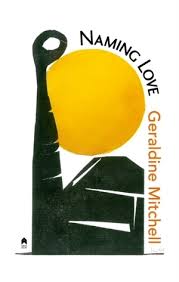
    Naming Love by Geraldine Mitchell, 80pp, Arlen House, 2024, ISBN 978-1-85132-319-7. International distribution: Syracuse University Press.  Available through  blackwells.co.uk and kennys.ie.

  • IV Poémame en el Raval

    IV Poémame en el Raval

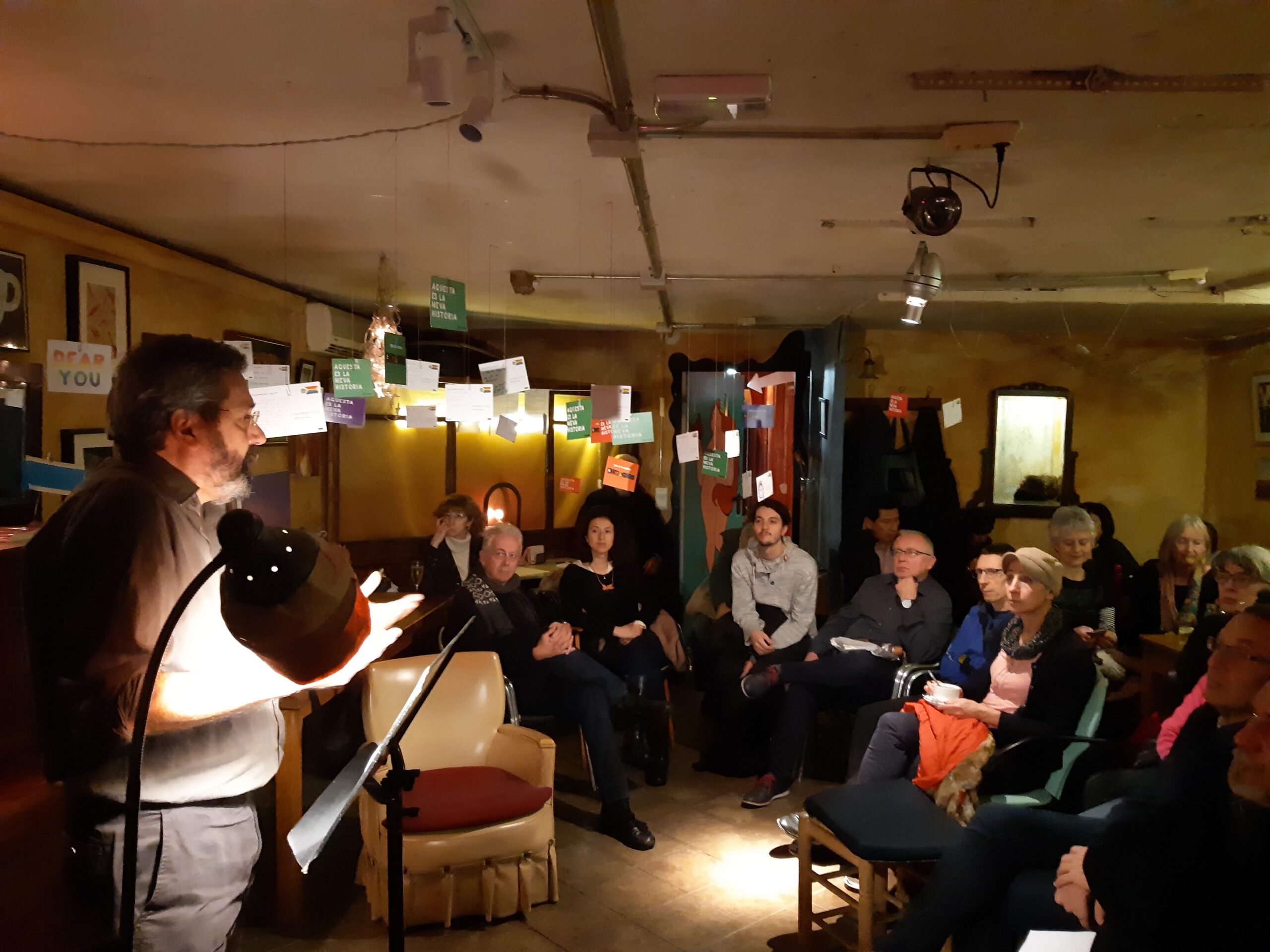
    El pasado 11 de abril tuvo lugar en Barcelona el IV Poémame en el Raval en el Café de las delicias. Esta vez también celebramos el 89 aniversario del poeta norteamericano Gary Snyder del que ya hemos hecho algunos artículos en la revista:

    “La isla de la tortuga”, de Gary Snyder, libro de poesía destacado de 2017

    7 poemas en edición bilingüe de Gary Snyder

    La isla de la tortuga o la vuelta a casa de Gary Snyder

    Los dos presentadores del acto, Dick Edelstein y José Luis Regojo, leyeron un mensaje de Gary Snyder:

    Thank you!  For telling me and writing the titles.  That’s a lovely set.  I hope you and your whole crew is flourishing.  We’ve had a long winter with much rain and snow but it’s great for the forest!

    Gary

    Posteriormente anunciaron que este sería el último Poémame en el Raval de esta temporada. La sala estaba a rebosar hasta el punto que bastante gente no pudo entrar y tuvieron que esperar a la segunda parte.

    Miquel Osset

    La primera parte contó con la lectura de poemas del poeta Miquel Osset en castellano. A Osset, Poémame ya le publicó una entrevista. A continuación la poeta Núria Esponellá hizo una breve introducción a su obra y nos leyó varios poemas en catalán, muchos de ellos inéditos. Y, por último, Craig Martin Getz, conocido en el recital por sus intervenciones previas en las sesiones de micrófono abierto, nos deleitó con sus poemas en inglés.

    Núria Esponella
    Craig Martin Getz
    J.L.Regojo

    Tras el descanso, José L. Regojo hizo una breve explicación de la personalidad y poesía de Gary Snyder. Dick Edelstein leyó tres poemas en inglés del libro ‘Les muntanyes són la teva ment’ Ed. Tushita, 2012 y el poeta catalán Jaume Subirana las traducciones al catalán. José L. Regojo leyó tres poemas en castellano de ‘La isla de la tortuga’, ed. Kriller71, 2017 y Dick Edelstein sus correspondientes versiones en inglés.

    Dick Edelstein

    Para finalizar el acto, nos deleitamos con los 5 poetas y las 6 poetas que nos leyeron sus poemas en la sección de micro abierto.

    Fueron M A R A V I L L O S O S.

    ¡Qué futuro que tiene la poesía viva! En contraposición con la poesía más académica y formal cerrada en sus palacios de cristal.

    Nos gustaría destacar la presencia de una poeta de Poémame que decidió venir a compartir su poesía con nosotros: @galernatramuntana (Lidia San Emeterio Arroyo).

    Para finalizar el artículo os añadimos un resumen de lo que ha estado Poémame en el Raval hasta hoy. Gracias a todos y todas por haberlo hecho posible y hasta el otoño que volveremos con más.

    Poémame en el Raval, 18 de enero 2018: Mujeres poetas irlandesas
    Poémame en el Raval, 18 de octubre 2018:  Día de las escritoras rebeldes y transgresoras
    II Poémame en el Raval, 13 de diciembre 2018: Poets Abroad

    III Poémame en el Raval, 21 de febrero: Primer aniversario.

  • III Poémame en el Raval

    III Poémame en el Raval

    El pasado 21 de febrero tuvo lugar en Barcelona el III Poémame en el Raval en el Café de las delicias. Esta vez también celebramos el primer aniversario de las lecturas poéticas Poémame en el Raval.

    Poémame en el Raval, 18 de enero 2018: Mujeres poetas irlandesas

    Poémame en el Raval, 18 de octubre 2018:  Día de las escritoras rebeldes y transgresoras

    II Poémame en el Raval, 13 de diciembre 2018: Poets Abroad

    Desgraciadamente ese día coincidió con una huelga general en Cataluña que impidió que la poeta catalana M.Antònia Massanet pudiera estar presente.

    José Ramón Ayllón

    Durante la primera parte del recital, tuvimos el placer de escuchar a José Ramón Ayllón, poeta de Zaragoza afincado en Barcelona, que nos deleitó con poemas de varios de sus poemarios premiados en los últimos años.

    Pellizco tus pezones mientras comes cerezas.
    Vas dejando huesitos casi rojos
    sobre colillas blancas y ceniza
    mientras yo voy contando los lunares
    de tu vientre desnudo. Te estiras como un gato;
    te arqueas persiguiendo la humedad de mi boca
    y el rítmico estribillo de mis dedos.
    Entumece la música de fondo
    de un anuncio en la tele
    la plácida cadencia de un gemido
    y me apartas el pelo de la cara,
    rojos también tus labios.
    Se estremecen los pliegues de tu piel;
    tensas los largos huesos de la noche
    bajo una serpentina de músculos despiertos
    y de estrellas fugaces.
    Definitivamente tendré que hacer un Facebook
    y empezar a colgar alguna foto
    que dé veracidad y atestigüe ante el mundo
    esta pornografía de emociones
    y sentimientos íntimos.
    (Climogramas de estación emocional, 2015)

    Eamon Mag Uidhir

    A continuación, el poeta y editor irlandés de la revista de poesía Flare, Éamon Mag Uidhir hizo un repaso a su poesía más reciente y nos leyó un poema escrito especialmente para la ocasión que transcribimos a continuación. También organiza en Dublín las lecturas poéticas Sunflower sessions.

    We put the clocks back at the weekend.
    But just for a single hour. In Catalunya
    they put the calendar back to 1939.

    The wind today’s from the South-East,
    from Barcelona, a whole France away from here.
    It bears voices from the anxious present, from
    the future’s hopes, from the pain of the past.

    We should know better than most how it feels
    to hear a republic denied and a province imposed-
    while a nation is revealed, bright and broadwinged,
    from the chrysalis of an old oppression.

    Barcelona, October 2017

    José Luis Regojo

    Una vez finalizaron, José Luis Regojo presentó su poemario Fronteras publicado por la editorial Autografía. Recitó y comentó diversos poemas enmarcados en la categoría de poesía social de denuncia de la situación de las personas refugiadas que llegan a Europa. En esta revista ya pudimos leer una reseña del poemario hace unos días.


    Un cortejo de refugiados
    pasa pidiendo aprobación,
    la Santa Compaña entre ellos.

    No la conocen.

    Una piara de empresarios
    se refocila en su pocilga
    para decidir.

    Una recua de políticos,
    unos tras otros,
    legisla.

    Tú y yo obedecemos.

    El cortejo de refugiados, Fronteras, Ed. Autografía, 2018

    Tras el descanso, se inició con gran éxito de poetas la sección de micro abierto.

    Dick Edelstein y José L. Regojo

    Para finalizar, los organizadores de Poémame en el Raval, Dick Edelstein y José L. Regojo, agradecieron la presencia y participación del público y se despidieron hasta la próxima sesión que tendrá lugar el jueves 11 de abril .

    La sala volvió a estar llena de personas de varias generaciones con ganas de vivir y disfrutar de la poesía más allá de la lengua en que esté escrita.

  • Crónica del II recital poético trilingüe Poémame en el Raval de Barcelona

    Crónica del II recital poético trilingüe Poémame en el Raval de Barcelona

    13 de diciembre 2018, 20h. Café de las Delicies, Rambla del Raval 47, Barcelona.

    Tras el éxito del recital piloto en enero y el primero de la nueva serie ‘Poémame en el Raval’ en octubre, asistimos al segundo recital y último del año 2018. Este recital contó con la asistencia de medio centenar de personas y tuvimos como novedad la presentación en la sección de micrófono abierto de una representación del grupo poético angloparlante Poets Abroad.

    El II recital poético trilingüe ‘Poémame en el Raval’ contó con la presencia de:

    Albert Planelles Vellvé CATALÀ. Poeta que ya fue entrevistado en nuestra revista en la sección ‘13 preguntas y un poeta…» el pasado 14 de marzo. Planelles nos leyó versos de su nuevo poemario Raig, publicado por Témenos editorial. Nos avanzó que en enero saldrá publicado un nuevo dietario y otro poemario para la primavera.

    Rafa Aranda CASTELLANO. Poeta que también fue entrevistado en nuestra revista en la sección ‘13 preguntas y un poeta...» el pasado 18 de abril. Nos avanzó que tiene un nuevo poemario que saldrá a la luz en la primavera del año 2019.

    Michael Bunn ENGLISH. Poeta que ha publicado diversos relatos breves y no se ha decidido a publicar su poesía rica en matices y llena de humor. Fue editor adjunto del diario Catalonia Today.

    Posteriormente, en la sesión de micro abierto contamos directamente desde Dublín con Frances Browner de Poets Abroad y otros miembros del mismo grupo residentes en Barcelona: Dick Edelstein y José L. Regojo. Tras ellos tuvimos el placer de escuchar a una serie de nuevos e interesantes poetas que participaron en el micro abierto y que se propusieron volver en febrero cuando celebremos el tercer recital.

    Finalmente, los organizadores del acto, Dick Edelstein y José L. Regojo nos avanzaron algunos de los poetas que vendrán en el recital de febrero y en el de abril.

    Como es habitual en estos recitales, el dinero recaudado en la caja de solidaridad (68€) entre los asistentes se dedicó a la defensa letrada del español condenado a muerte en los EEUU, Pablo Ibar, coincidiendo con el juicio que se está celebrando estos días en Florida. 

    En los dos anteriores recitales (50€ y 30€) se dedicó al área de personas refugiadas y migrantes de la Fundación BarcelonActua.

    Sobre Pablo Ibar

    El 4 de febrero de 2016 el Tribunal Supremo de Florida anuló el juicio en el que Pablo Ibar fue condenado a muerte en el año 2000 porque no tuvo una defensa letrada eficaz. Por ello fue condenado a muerte con pruebas “escasas” y “débiles“. El Tribunal Supremo ordenó que se repitiera el juicio. Por ello es esencial garantizarle una defensa letrada eficaz en el nuevo juicio, que se está realizando en estos momentos. Del 1.300.000$ que cuesta su defensa, ya se ha recaudado el 84% a base de microdonaciones. Te pedimos que participes en esta campaña de crowdfunding. Si quieres saber más.